


2025-2026 Annual Report

About us
About us

About Queensland Positive People
Queensland Positive People (QPP), is a peer-led, community-based organisation committed to improving the lives of all people living with HIV and help reduce new transmissions of HIV and STIs across Queensland. QPP offers the following services:
- Peer-led HIV & other STI point of care testing, prevention and education
- Nurse practitioner-led in person and telehealth HIV & STI treatment and management, PrEP & PEP
- Online and vending machine HIV self testing kits
- Community development and peer support
- Peer navigation to navigate the complex environment of HIV diagnosis, treatment and care
- Practical assistance with accessing medications, clinical services, food, housing and other essential support services
- Aged Care Navigation
- Alcohol and other drugs harm minimisation
- Legal support and referral for stigma, discrimination, migration and the law
- Emergency funding support
- Advocacy and policy development
- Research
- World AIDS Day and other health and awareness campaigns
QPP are proud members of NAPWHA, QCOSS, Health Equity Matters, and ASHM.
QPP is an Australian, Incorporated Association and registered Australian Charity for taxation purposes. We appreciate the support and assistance given by Queensland Health, who provide primary funding for Queensland Positive People.

Strategic plan
Our 2021-2025 QPP Strategic Plan informs delivery of our whole of life programs, ensures our services and inclusive and innovative, promotes enhancing our relationships with our communities and stakeholders, whilst keeping us focused on maintaining best practice standards and strengthening our funding for the future. You can explore our progress towards our goals below.
| Strategic Areas | KPIs | 21/22 | 22/23 | 23/24 | 24/25 | 25/26 | Key Achievements | |
| Peer support and navigation | Delivered as per QH Contract | ♦ | ♦ | ♦ | ♦ | ♦ |
|
|
| QPP Social groups | ♦ | ♦ | ♦ | ♦ | ♦ | PN led activity based social groups delivered Continuing growth in social groups in Brisbane and regional areas Better Connect+ funded from Department of Seniors |
||
| Peer HIV/STI prevention and point of care testing | Delivered as per QH Contract | ♦ | ♦ | ♦ | ♦ | ♦ | Queensland HIV Home Testing program Outreach Testing at SOPV Fee for service at universities Sexual Health and HIV Service for treatment clinic Nurse practitioner service Funding to implement National CONNECT National Vending Machine program coordination in Queensland with 5 machines. |
|
| HIV treatment and management | Delivered as per QH Contract | ♦ | ♦ | ♦ | ♦ | ♦ | Case management and collaborative case management with the HIV Public Health Team | |
| Stigma and discrimination | Delivered as per QH and HALC Contract | ♦ | ♦ | ♦ | ♦ | ♦ | Case management for legal support Sub-contract arrangement with HALC - increased legal support and legal clinics |
|
| Delivery of HIV Stigma Campaign | ♦ | ♦ | ♦ | ♦ | ♦ | Launch IAS: HIV Science Conference July 2023 Funding from ViiV, Gilead, QH and pro-bono support from Wonderkarma and partners Continued promotion and delivery of campaign materials Continuing to advocate for ongoing funding |
||
| Ageing and disability | Queensland government funding secured | ♦ | ♦ | ♦ | ♦ | ♦ | Engagement with Department of Seniors and Disability Partnership with Department of Seniors, Disability – host Aged Care Forum (June 2023) Ongoing engagment with Minister and Department for state budget allocations Delivery of social isolation services for seniors in Brisbane with 5 year contract - Better Connect+ |
|
| Primary Health Network funding secured | ♦ | ♦ | ♦ | ♦ | ♦ | Care Finder Program funding secured with Micah and Communify for 1.0 FTE position – Brisbane North and South PHNs Funding secured to 2029 |
||
| Business Case Development for MyAgedCare | ♦ | ♦ | ♦ | ♦ | ♦ | Engaged with Consultant Project completed – Summary: not viable for QPP to pursue becoming a MyAgedCare service provider |
||
| Community development | Funding secured for additional programs | ♦ | ♦ | ♦ | ♦ | ♦ | Community Development Officer position 1 x FTE Lord Mayors Charitable Trust Grants for community event. |
|
| Education | Funding secured for program/activity | ♦ | ♦ | ♦ | ♦ | ♦ | Significant in-service training at community and government health services. Providing lived experience speakers at community, sector, and government level events and opportunities. Promoting HIV Stigma Reduction Module |
|
| Links to other health and social/community services | Housing, mental health | ♦ | ♦ | ♦ | ♦ | ♦ | Continued expansion of referral networks and partnerships. | |
| Mental health support | Queensland government funding secured | ♦ | ♦ | ♦ | ♦ | ♦ | Enhancing relationship with Queensland Mental Health Commission Successful application and funding for Phase Two of PALS Project. Submission for LGBTI Australia Federal Grant for Mental Health and AOD Support statewide tele-health counselling service (Successful notification in July 2026) |
|
| Primary Health Network funding secured | ♦ | ♦ | ♦ | ♦ | ♦ | Developing relationships with PHNs No current funding opportunities |
||
| Strategic Areas | KPIs | 21/22 | 22/23 | 23/24 | 24/25 | 25/26 | Key Achievements |
| Ensuring that our services are: | |||||||
| Informed by people living with HIV | Communication Engagement and Co-design Activities | ♦ | ♦ | ♦ | ♦ | ♦ | QPP Engagement Survey (QPPES) completed (2022) QPPES Implementation Plan developed (2023) QPPES Implementation Plan completed (2024/25) Consultation and co-design for 2026-2031 Strategic Plan completed (2025-2026) |
| Empowering and strengthening resilience | Investment in programs/opportunities | ♦ | ♦ | ♦ | ♦ | ♦ | Funding provided for Queensland PLHIV to attend annual PLDI workshops Queensland representation on all national PLHIV networks Community Advisory Group ongoing Devilvery of co-design for 2026-2031 QPP Strategic Plan |
| Compassionate | High levels of satisfaction across programs/services and community | ♦ | ♦ | ♦ | ♦ | ♦ | 95%+ client satisfaction across program areas |
| Equitable | High levels of satisfaction across programs/services and community | ♦ | ♦ | ♦ | ♦ | ♦ | 95%+ client satisfaction across program areas |
| Committed to reconciliation | Reconciliation Action Plans | ♦ | ♦ | ♦ | ♦ | ♦ | QPP RAP Reflect Plan developed (2022) QPP RAP Reflect launched (2023) QPP RAP Reflect completed (2024) QPP RAP Innovate endorsed (2025) QPP RAP Innovate in progress (2025-2026) |
| Inclusive - ensuring no-one is left behind | Clients and members reflect diversity of people living with HIV community | ♦ | ♦ | ♦ | ♦ | ♦ | Strengthening database from 2023/2024 Diversity and Inclusion Program established 2023/2024 including Diversity and inclusion Working Group Queensland representation on all national people living with HIV networks Increase in membership through social groups and Better Connect+ |
| Strategic Areas | KPIs | 21/22 | 22/23 | 23/24 | 24/25 | 25/26 | Key Achievements |
| Enhancing relationships with our: | Communication Strategy and annual action plan delivered | ♦ | ♦ | ♦ | ♦ | ♦ | Communication Strategy 2021-2022 Action Plan delivered 2022/2023 Action Plan delivered 2023/2024 Action Plan delivered 2024/2025 Action Plan delivered 2025/2026 Action Plan delivered |
| Clients | 90+% clients providing positive feedback | ♦ | ♦ | ♦ | ♦ | ♦ | 95%+ client satisfaction/positive feedback across program areas |
| Members | Increased membership numbers | ♦ | ♦ | ♦ | ♦ | ♦ | Increase in membership through social groups |
| Staff | Improvements in staff engagement surveys | ♦ | ♦ | ♦ | ♦ | ♦ | Scoping up Staff Recognition Program 2022/2023 Focus on staff wellbeing 2023/2024 Diversity and Inclusion Program 2023/2024 Delivery of QPP Thrive Health and Wellbeing program QPP Staff Engagement Surveys |
| Volunteers | Enhanced opportunities for volunteers | ♦ | ♦ | ♦ | ♦ | ♦ | IAS2023 Scoping up Volunteer Program 2023/2024 and opportunities for funding Embedded Volunteer Program Coordination capacity into Operations Team Developing system and framework for Volunteer Program embedding accreditation standards Recruitment of Community Social Group hosts |
| External Stakeholders | Forge new and strengthened relationships | ♦ | ♦ | ♦ | ♦ | ♦ | Queensland Health Department of Communities and Housing Department of Seniors, Disability and ATSI Partnerships Primary Health Networks International AIDS Society Community and health services across Queensland – Communify, MICAH Office of the Attorney General Department of Public Prosecutions Queensland Police Service Volunteering Queensland Council of the Ageing Queensland Members of Parliament LGBTI Health Australia Commonwealth Department of Health Disability and Ageing Commonwealth Department of Treasury Australian Centre for Disease Control Queensland BBV & STI Advisory Committee Parliamentary Friends for Ending HIV, STIs and other BBVs Health Equity Matters Membership Organisations |
| Connections with our diverse communities | QPP being visible at community events | ♦ | ♦ | ♦ | ♦ | ♦ | CWC World AIDS Day PRIDE NAIDOC Reconciliation Australia IAS (Community and Scientific) Conferences |
| Strategic Areas | KPIs | 21/22 | 22/23 | 23/24 | 24/25 | 25/26 | Key Achievements |
| Observing and developing standards across QPP that are: | |||||||
| Best practice | Accreditation obtained: Human Services Quality Framework | ♦ | ♦ | ♦ | ♦ | ♦ | Accreditation obtained 2022 Mid-term audit passed May 2023 Audit September 2024 passed Audit March 2026 passed |
| Advocacy | ♦ | ♦ | ♦ | ♦ | ♦ | Queensland HIV and STI Decriminalisation Roundtable 2023 HIV and Ageing • HIV and Migration Decriminalisation of HIV in Queensland with Office of the Attorney-General and Legal and Safety Committee Ongoing advocacy for PLHIV participation in Combat Sports/Martial Arts Submission to Review of Human Rights and Anti-discrimination framework Pending review of Queensland Criminal Code regarding transmission of serious disease by QLRC Supporting community member to make formal submission to Aged Care Parliamentary Inquiry |
|
| Accredited | Accreditation obtained: Human Services Quality Framework | ♦ | ♦ | ♦ | ♦ | ♦ | Accreditation obtained 2022 Mid-term audit passed May 2023 Audit September 2024 passed Audit March 2026 passed |
| Innovative | Involvement in research and evidence-making initiatives | ♦ | ♦ | ♦ | ♦ | ♦ | Research – state and national Research Advisory Committees |
| Aspirational | Involvement in research and evidence-making initiatives | ♦ | ♦ | ♦ | ♦ | ♦ | Research – state and national Research Advisory Committees |
| Measurable | Involvement in advocacy, policy development and research | ♦ | ♦ | ♦ | ♦ | ♦ | Research – state and national Research Advisory Committee Consultation on QH Sexual Health Framework and HIV and STI Action plans Consultation on National HIV Strategy Consultation on QH Workforce Strategy HIV treatment for Medicare Ineligible people Queensland Department of Health Funding Consultation Stronger Together - BBV and STI Partnership Forum |
| Safe and deliver quality services | High levels of satisfaction across organisation, programs/services and community Recommendations from accreditation, WHS and HR audits are implemented |
♦ | ♦ | ♦ | ♦ | ♦ | Workplace Health and Safety Audit completed Implementation of WHS recommendations WHA audits completed and actioned |
| Strategic Areas | KPIs | 21/22 | 22/23 | 23/24 | 24/25 | 25/26 | Key Achievements |
So that it is:
|
Business case development completed | ♦ | ♦ | ♦ | ♦ | ♦ | Completed engagement with Baxter Lawley Strategic planning to be implemented for 2023/2024 |
| Additional funding streams secured for provision of additional programs/services | ♦ | ♦ | ♦ | ♦ | ♦ | QH Service Agreement 2021/2022-2025/26, 2026-27 Additional funding for RAPID and HIV Home Testing Care Finder Program BN and BS PHN Aged Care Forum Gilead Grant - National HIV Home Testing ViiV Grant - Digital Health Connect Grant Stigma & Discrimination Online Training HIV test vending machines and POCT at English Language Schools Additional funding from QH for core service agreement HIV Stigma Campaign – Regional Queensland Social isolation services for seniors ViiV and Gilead and QH – IAS HIV Science Conference (IAS Positive Lounge, IAS Community Forum, Community Social Event, HIV Stigma Campaign) HIV Stigma Training Module Additional funding from QH for core service agreement HIV Stigma Campaign - North Queensland Podcast for Aged Care - COTA 'Snack' Social isolation services for seniors - Better Connect+ Aged Care Navigator - Care Finder PALS - Positive AOD Life Support RAPID Nurse Practitioner Gilead Sciences - National Vending Machine program - CONNECT HIV self test vending machines and ViiV - POCT at for Latin Communities and English Language Schools One off funding for expanded HIVST programs LMCT - Health and Wellness Workshops QH - Stigma Module Promotion QMHC - PALS 2.0 |

President and CEO report
President and CEO Report
This past year has brought into sharper focus both the extraordinary progress we have made and the challenges that remain, globally, nationally and here in Queensland.
A changing global HIV response
It is a pivotal period for the global HIV response. Decades of hard-won progress are increasingly fragile, with rising HIV notifications in parts of the Pacific, Philippines, Central Asia, Latin America and Eastern Europe. This is occurring alongside reductions in international funding, increasing criminalisation and discrimination, persistent inequality and geopolitical change.
Yet the global community are sending strong messages of determination. Thirty years of effective antiretroviral therapy, the transformative impact of U=U, increasingly effective HIV PrEP, long-acting treatment and prevention, and continued vaccine and cure research demonstrate extraordinary scientific progress. However, HIV is not finished business, and science alone will not determine our future success.
The global HIV architecture is changing, with greater emphasis on domestic and regional leadership, integration with primary healthcare, sustainable financing and ensuring community leadership and human rights are protected as systems evolve. The challenge beyond 2030 is not to recreate the response of the past, but to build one that combines science, rights, sustainable investment, community leadership and equitable access.
Australia: protecting progress and responding to change
Here in Australia, QPP has continued to work closely with NAPWHA and our national network of peer-led HIV organisations across advocacy, policy and program development. Together, we have advocated for national expansion of HIV Peer Navigation Programs and identified emerging HIV and STI prevention and healthcare needs among people participating in the Pacific Australia Labour Mobility (PALM) scheme.
We have also been closely monitoring changes in the legal and regulatory environment. At the same time, the rapidly changing digital environment is creating new challenges for community organisations. Social media regulation and platform changes have implications for sexual health promotion and our ability to reach communities, while staff and community members can be exposed to increasingly harmful online interactions. Working with our national peak organisations, we continue to consider how we protect people while ensuring trusted, evidence-based health information remains accessible.
QPP: growth, diversification and impact
For QPP, it has been another incredible year of achievement and growth. We have successfully diversified our funding, established new partnerships and expanded the scope of our services while remaining firmly grounded in our peer-led identity and our commitment to people living with HIV and affected communities.
The successful establishment of our Nurse Practitioner service has been a major milestone, expanding QPP’s clinical offering and strengthening our integrated approach to HIV and STI prevention, testing, treatment and care. We have continued to expand access to HIV self-testing across Queensland through our mail out and vending machine programs. We also transitioned chlamydia and gonorrhoea point of care testing sample processing from our in-house research model to Pathology Queensland, requiring significant operational and procedural change while maintaining continuity of service and the client experience.
A range of projects and partnerships have enabled us to reach new communities and respond to emerging needs. Our international student project strengthened engagement with multicultural communities. The PALS (Positive AOD Life Support) project has established new partnerships to explore alcohol and other drug experiences through community co-design, with funding now secured for its next phase. Our social connection activities have continued to grow, while Aged Care Navigation is now well integrated within QPP’s service offering.
Across all of this work, QPP has continued significant political and departmental engagement with the Queensland and Commonwealth Governments and maintained strong partnerships across the HIV sector. We have contributed to numerous research collaborations and shared our experience, evidence and learnings at a variety of conferences and forums.
Sustainability in a changing commissioning environment
This growth has occurred during a period of uncertainty around our core Queensland Health funding. Historically, longer-term service agreements have provided important stability for QPP and the communities we serve. Our current service agreement has instead been extended for 12 months to June 2027 while Queensland Health undertakes an NGO investment and market review to inform future commissioning of BBV and STI services.
While we would have welcomed the certainty of a longer-term agreement, we recognise the opportunity to consider future service needs, innovation and alignment with the Queensland BBV and STI Plans 2030. QPP will engage constructively and strongly in this process, advocating for commissioning arrangements that recognise the unique value of peer-led community organisations and provide the stability required to plan, retain skilled workforces and deliver high-quality services over the longer term.
Strengthening QPP for the future
Internally, we have also been preparing QPP for its next chapter. Our strategic planning process has established our direction for the next five years, while our successful accreditation audit, with only a small number of observations for continuous improvement, provides important assurance about the quality of our systems and services.
We have experienced a number of staff and leadership changes. While we have farewelled valued colleagues as they pursued personal and exciting professional opportunities, these movements have also created opportunities for internal promotion, leadership growth and new skills across QPP.
The year ahead will be another significant period of evolution. We will begin implementation of our new five-year Strategic Plan and strengthen the accountability, structures, roles and performance systems required to deliver it. As our community health and clinical services expand, we will also invest in the operational and digital infrastructure that sits behind them.
We are also delighted to have secured funding to establish a new statewide mental health and alcohol and other drug counselling service for people living with HIV and LGBTQIA+ communities. Delivered through telehealth alongside peer-led group programs online and in person, this represents another important expansion of QPP’s integrated community health and wellbeing services.
None of these achievements happen in isolation.
To the QPP team, thank you for your commitment, adaptability, expertise and care. To our Board, thank you for your stewardship, support and belief in our direction. To our government, research, clinical, community and funding partners, thank you for continuing to work alongside us.
Most importantly, thank you to people living with HIV and the diverse communities who use our services, participate in our programs, contribute to our research and co-design, share their experiences and hold us accountable. You remain at the heart of everything we do.
There is much to celebrate and much still to do. We enter the coming year with an ambitious new Strategic Plan, expanding services, strong partnerships and an extraordinary team. We are incredibly proud of what we have achieved together and excited about what we can achieve in the year ahead.


Dr Ed Pilling
President


Melissa Warner
Chief Executive Officer

Patron statement

##
##

The Hon. Michael Kirby AC CMG*
Patron – Queensland Positive People
*Former Justice of the High Court of Australia. Patron of the Kirby Institute for Infection and Blood Borne Diseases (2011 – ); Members of the WHO Global Commission on AIDS (1989-1994); Commission of the UNAIDS Reference Group on HIV and Human Rights (2001 – 2017).

Delivering whole of life programs
Delivering whole of life programs


Peer HIV and STI prevention and point of care testing
RAPID – Expanding and Impacting
The RAPID service saw a pivotal shift in its service model in 2025-26, with three significant changes occurring:
- After 12 years as a 100% peer-led service, RAPID introduced our first clinician with the introduction of our Nurse Practitioner clinic.
- After eight years of in-house chlamydia and gonorrhoea point of care testing (under Ethics approval), we transitioned to an external pathology partner to process the tests off site. This means the service is no longer required to operate as a research project and is now established as a business-as-usual service.
- QPP was successful in becoming the Queensland coordinator for the recently commenced national CONNECT HIV self-testing vending machine program.
We continued to provide a high-quality service for 6,378 clients over 7,912 occasions of service, providing 28,196 tests for HIV, syphilis, chlamydia and gonorrhoea.
Within our testing clinic and outreach services we identified:
- 10 HIV point-of-care test (POCT) reactives
- 45 Syphilis POCT reactives
- 662 Chlamydia detections
- 341 Gonorrhoea detections
Key demographics included:
- 2,393 (30.3%) of clients identified as gay, bisexual or men who have sex with men
- 134 (1.7%) self identified as Aboriginal and/or Torres Strait Islander
- 4,756 (60.1%) were born overseas
- 2,961 (37.4%) were not eligible for Medicare
- 1,505 (19.0%) people were born overseas, English not being their first language and have been in Australia for less than 5 years, and of those 642 (42.7%) had never tested, or not tested in the last 12 months.
With the commencement of the Nurse Practitioner (NP) clinic, we have seen a reduction in people being turned away at the door, as people presenting with symptoms can now be seen.
Our outreach services at Wet Spa and Sauna and University of Queensland continue, and have been supported further by additional testing options via vending machines and targeted testing for international students.
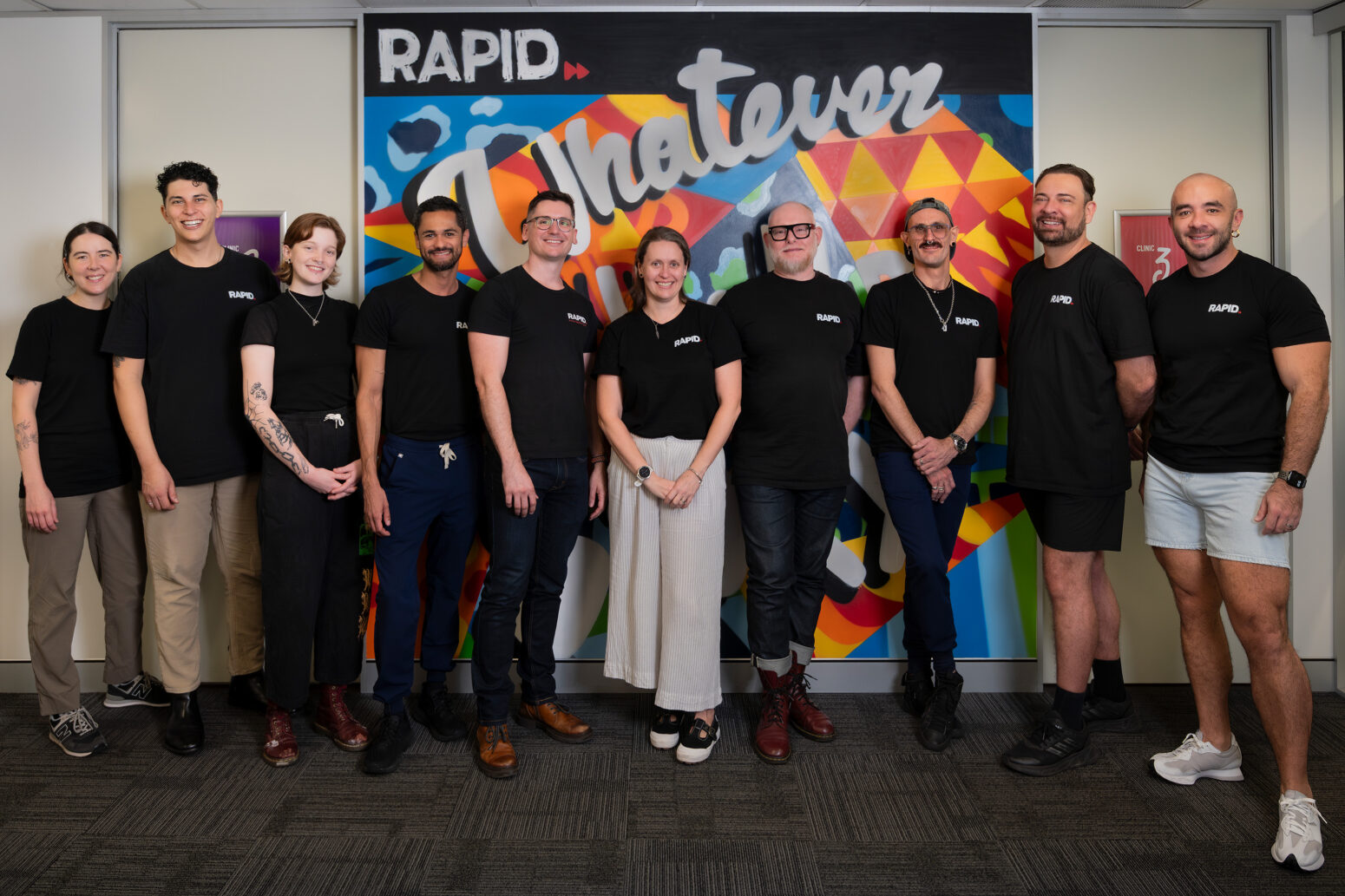
With the increased promotion of both the CONNECT vending machines and HIV self-test mail out program, RAPID have had the opportunity to provide in-service sessions and education to other organisations and services, raising further awareness of services and key prevention strategies.
You can explore the below data in greater detail but hovering over each data point you are interested in, and display/omit data by clicking on the chosen option/s from the key below.
Nurse Practitioner service
Through an election commitment, QPP received 12 months funding to pilot a Nurse Practitioner model of care to complement the existing peer-led RAPID clinic.
The Nurse Practitioner (NP) clinic provides a continuum of care within QPP from asymptomatic screening currently at RAPID, the NP can provide symptomatic HIV and STI testing, and treatment, as well as support for people living with HIV as an S100 provider and improving access for people that may experience barriers to mainstream service options, and linkage into QPP’s Life+ Program for Peer navigation and case management.
The Nurse Practitioner started in July 2025 – with a 3-month set up time, the clinic opened on 1 October 2025. Numbers have far exceeded expectation – averaging 11.5 consults per day, as opposed to the target of 6-8.
This integrated service has not only improved access and support within QPP services but has alleviated ongoing burden to the public sexual health services enabling them to provide more complex care as needed.
In December 2025, a Clinical Administrator was employed, providing crucial support in front door triage, booking and administration. Our priority going forward is additional support within a Service Coordinator capacity, and increased staffing to ensure service delivery is maintained.
To 30 June 2026, the NP clinic has provided 1,913 occasions of service to 867 clients. Of the 867 clients, 430 (49.6%) were provided to people without access to Medicare.
Nine people living with HIV were supported in their HIV management.
Of the 1,913 occasions of service:
- 382 clients received an internal referral for treatment
- 411 symptomatic clients were provided care
- 22 people accessed PEP
- 80 people were initiated on PrEP and
- 1,081 STI treatments were provided.
The Nurse Practitioner model of care was presented as an in-person poster presentation at IAS AIDS 2026 in Rio De Janeiro. The continuum of care within QPP is being poster presented at ASHM HIV/AIDS Conference in September 2026.
HIVST Mail-out program
The HIV self-testing mail out program continues to reach those at need across Queensland. Work has continued to broaden our reach to non-metropolitan locations.
A total of 513 kits (with a target of 400-600) were sent across Queensland reaching 17.9% of clients residing outside of the metropolitan areas.
- 49% of clients were aged 25-34.
- Thirteen clients (3.7%) reported as being from Aboriginal or Torres Strait Islander origin.
- 219 (42.7%) clients were born overseas, and 165 (32.2%) were Medicare ineligible.
- 3 HIV reactives tests were recorded, with 2 being confirmed.
In October 2025, RAPID attended and presented at Deadly Sex Conference in Cairns. This was well-received and opened several discussions and promotion options.
New posters and postcards were emailed to stakeholders. These were also added to the QPP Shop providing stakeholders with easy access to order free promotional materials. QPP Shop provided 47 posters and 365 postcards in 10 orders.
In March 2026, RAPID and QPP attended the Gatton PALM Scheme Health Day to promote self-tests. We were able to speak with visitors and show them how the kits work. For this health day, we slightly amended the HIVST card and provided a direct phone contact. The aim was to provide an opportunity for open discussion and answer any health or immigration concerns confidentially.
CONNECT and QPP HIV test kit vending machines
In August 2025, QPP were recruited by Thorne Harbour Health (THH) as the Queensland coordinator for the national CONNECT vending machine program. A Connect Project Support Officer was recruited and is responsible for planning and implementation of HIV self-test kit vending machines in universities and targeted locations across Queensland.
THH has currently provided QPP with five vending machines for universities, alongside five QPP-owned machines (funded through Gilead and Qld Health).
To date, we have vending machines in five locations:
- Queensland University of Technology, Gardens Point
- Queensland University of Technology, Kelvin Grove
- Wet Spa and Sauna, Bowen Hills
- Laneway, Cairns
- QuIHN, Townsville
A sixth vending machine is currently being installed in the University of Queensland Union building.
Since commencement, 436 kits have been distributed across Queensland. A further nine vending machines will be situated over the coming financial year with a focus on Northern Queensland, Gold and Sunshine Coasts and Ipswich.
Pathology Queensland partnership
Since 2017, RAPID has provided chlamydia (CT) and gonorrhoea (NG) screening using molecular point-of-care testing under ethics approval. With no foreseeable regulatory pathway permitting peers to continue this testing, we have pursued a sustainable alternative: peer-led, intra-client pooled specimen collection with laboratory analysis.
In July 2025, QPP partnered with Pathology Queensland to validate the Abbott Alinity m STI assay for pooled samples. RAPID provided 118 samples overall (32 reactive CT, 31 reactive NG, 4 dual (CT/NG) and 52 non-reactive). Results exceed previous thresholds with 98.2% concordance for pooled vs individual, and 97% concordance with CT/NG detected cases.
From December 2025, this became our business-as-usual model, with samples being pooled onsite and sampling taking place at an external PQ site.
Findings from the partnership have been presented via posters at ASHM SRH 2025 and 2026.


ViiV Healthcare funded English language school and Latin American project
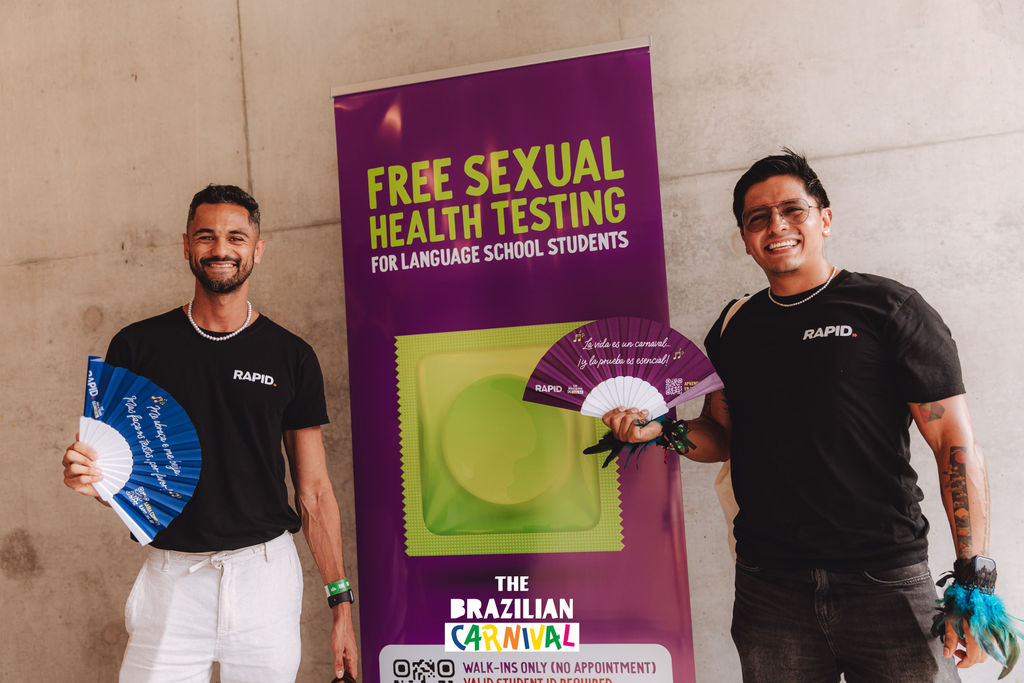
QPP received a ViiV Healthcare Positive Action Community Grant in 2023, for a peer-led HIV/STI testing and education project targeting recently settled Latin American migrants in Brisbane.
Challenges with English Language Schools prevented the establishment of on-campus testing, despite outreach to 13 language schools, TAFE Queensland and three service providers. In response, QPP adapted the project by establishing a dedicated RAPID clinic and expanding its focus to international students and the broader Latin American community.
Activities included multilingual clinic services and online resources, social media promotion, outreach at the Brisbane Brazilian Carnival, and a multilingual testing initiative at the University of Queensland.
Overall, 92 people were tested: 59 through RAPID and 33 at UQ. Seven infections—six chlamydia and one syphilis—were detected, with all affected clients referred for treatment. Of 81 assessed participants, 43 (53.1%) were born in non-English speaking countries, recently arrived and with little to no testing history.
All clients received culturally appropriate education on U=U, PrEP, PEP and accessing healthcare without Medicare. Online resources attracted 433 visitors and 744 page views, while one language school added sexual-health information to its student handbook.
Although school-based testing was not achieved, the adapted approach successfully reached priority communities, identified infections and connected clients with treatment.
A poster was presented at the 2025 ASHM HIV/AIDS Conference for this project.
Peer support and navigation
Peer navigation and services
Over the past year, QPP’s Peer Services program continued to place lived experience at the centre of support for people living with HIV across Queensland. Through Peer Navigation, community development and strong referral pathways, the team supported people at very different points in their HIV journey – from a new diagnosis, to treatment and disclosure, through to challenges involving housing, relationships, migration, mental health, alcohol and other drug use, ageing and connection to community.
Our Peer Navigators have been there for 297 clients, supporting them on their journey to live well with HIV.
Peer Navigation is often most valuable when a person feels overwhelmed by systems or unsure what comes next. Our Peer Navigators bring professional skills alongside lived experience, creating a space where people can ask questions without judgement, build confidence and make decisions at their own pace. During the year, the service continued to strengthen its approach to case review, referral allocation and escalation, helping ensure people were connected to the right level of support at the right time.
Peer Services also expanded the ways community can connect beyond individual support. Monthly social groups, Community Advisory Group participation and community-led activities created opportunities for people to build relationships, reduce isolation and have a direct voice in how QPP services develop. The appointment of a dedicated Community Development Officer strengthened this work and supported closer coordination between Peer Navigation and community engagement.
“
I would like to express my deepest gratitude and sincere appreciation to everyone at QPP for the incredible support you have given me throughout my journey.
From the very first time I walked into QPP, I was welcomed with kindness, respect, and understanding. Coming from Papua New Guinea, where many people living with HIV continue to face discrimination, stigma, and violence, I carried a great deal of fear, sadness, and depression. It was not easy to open up about my experiences.
I would especially like to thank my Peer Navigator – his patience, compassion, and willingness to listen gave me the confidence to believe in myself again. He supported me through many challenges and encouraged me to keep moving forward, even during the most difficult times. I will always be grateful for his professionalism, kindness, and genuine care.
I found a place where I truly felt accepted and where I belonged.
QPP’s support gave me the strength to complete my studies, obtain my permanent residency, and now begin working in the career I am passionate about.
Please accept my heartfelt thanks for the important work that QPP does for our community. Your organisation changes lives by giving people hope, dignity, and the confidence to build a better future. I am living proof of the positive impact your services have on people’s lives. Thank you once again to the Peer Navigation team for believing in me and walking beside me throughout my journey. I will always be grateful for your support and will proudly speak of the difference you have made in my life.”
”
We also continued investing in the peer workforce itself. Refreshed peer practice meetings, case reflection, professional development and sector participation strengthened consistency, confidence and leadership across the team. Our Peer Navigators contributed community perspectives to sector conversations, conferences and service partnerships, reinforcing a simple principle: people living with HIV should not have to navigate complex systems, stigma or major life changes alone.
Across all of this work, the aim remains the same – practical support, genuine connection and a peer beside you when it matters most.Across all of this work, the aim remains the same – practical support, genuine connection and a peer beside you when it matters most.
You can explore the below data in greater detail but hovering over each data point you are interested in, and display/omit data by clicking on the chosen option/s from the key below.
HIV treatment and management
Life+ case management
The case management team has undergone some significant changes of staff in the past year with four new team members. These new members contribute unique skill sets and lived experience to enhance the quality of the program. Of the nine case managers in the team we now have four Peer Treatment Facilitators, our largest peer representation on the team since its inception ten years ago. Equally the team’s gender diversity of four men, four women, and one transgender woman, alongside cultural diversity, helps us in serving our increasingly diverse client base.
Our case managment team has supported 396 clients with complex barriers to treatment and wellbeing.
This past year has been notable for a steady increase in support provided to people born in Papua New Guinea and other Pasifika countries, many being diagnosed for the first time in Australia while on temporary visas. The relatively high number of women presenting during pregnancy and navigating childbirth and post natal care represents a complex subcategory of cases being supported in the team, and we are working on ways to advocate for improvements in the collaborative approach for health services in this field.
The ongoing crisis in housing and cost of living continues to be a major driving force placing pressure on already vulnerable people in the community with knock on effects in increased alcohol and other drugs use and mental health issues.
You can explore the below data in greater detail but hovering over each data point you are interested in, and display/omit data by clicking on the chosen option/s from the key below.
Community development and education
Community development and social groups
Over the past year, our Community Development program has been repositioned as central to the QPP mission to build community that is mutually supportive and free from stigma. We have undertaken an extensive consultation with the community – both through the strategic planning community consultation as well as direct engagement with each social group to talk with attendees about their ideas for future activities.
QPP social groups provide ongoing support for people who are living with HIV in Queensland and central to our mission to build a community free from stigma.

The social groups can act as an entry point to QPP formal supports or a follow- on step down, or it can be just a place to feel connected and belong with people of similar lived experience. We have hosted five ongoing monthly groups in Brisbane and eight in regional centres around Queensland, with a total of 94 group events. We had 735 attendances across the monthly groups in the 12 month period, which is showing again strong growth from the previous year, clearly demonstrating the interest and value that social connection provides.
QPP also delivered a series of ten topical workshops for people living with HIV under the banner “Thrive”. Themes focussed on living well with HIV included self-care and stress management, addressing stigma, disclosure and healthy relationships, and aging with HIV. The workshops attracted 122 total attendances across the 10 workshops.
We’d like to thank the Brisbane Lord Mayor’s Charitable Trust for providing funding for the Thrive workshop series, and our end of year social group event through their community grant scheme.
“We all get on well, feels like a family”
“Clients expect the group to be very serious… and they are shocked when they find out it isn’t like that and that we just talk”
“We all look forward to seeing each other and stay in touch outside of meet ups”
“It’s been healing… this is the power of community”
QPP’s dedicated Community Development Officer has strengthened this work and supported closer coordination between Peer Navigation and community engagement.
Positive AOD Life Support (PALS) project
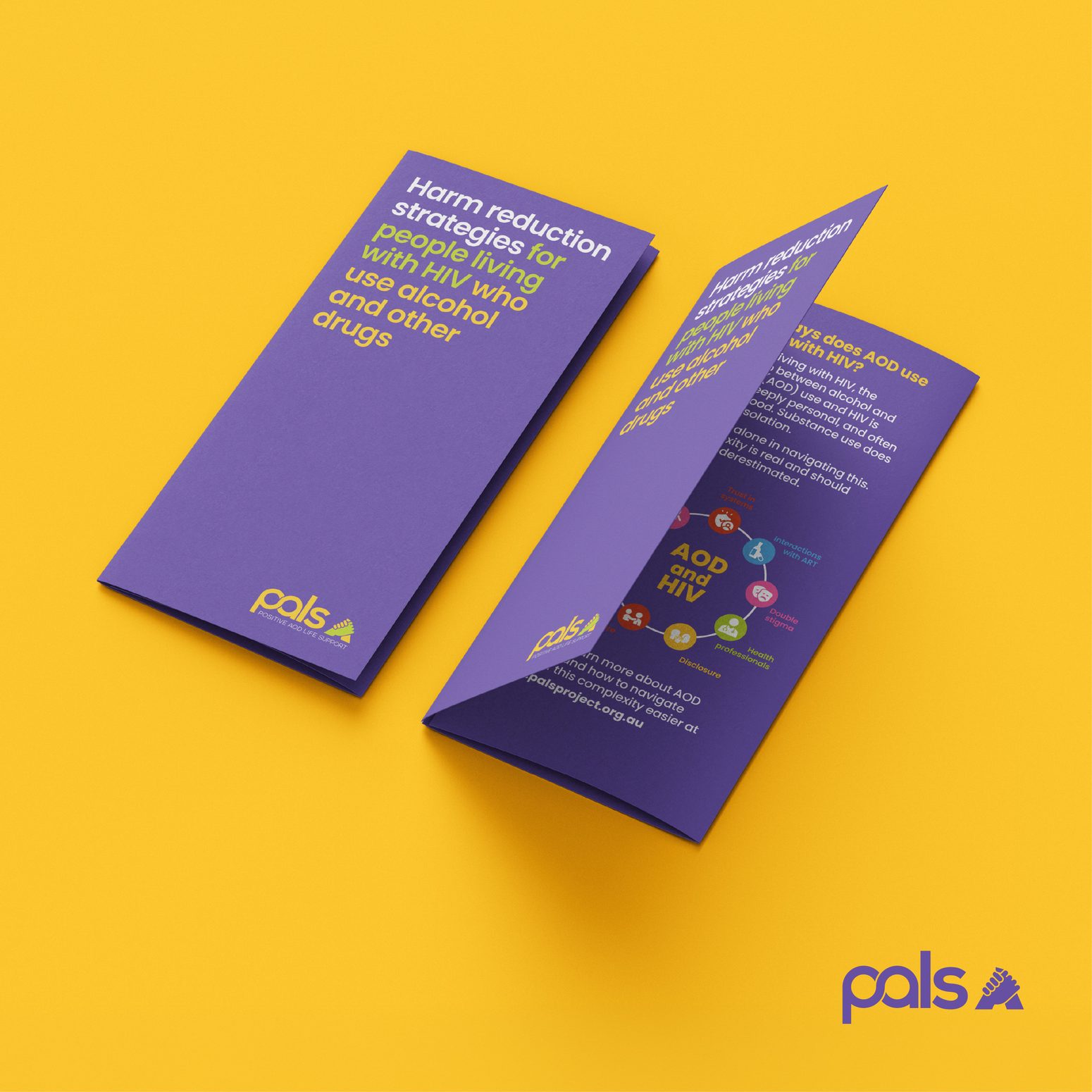
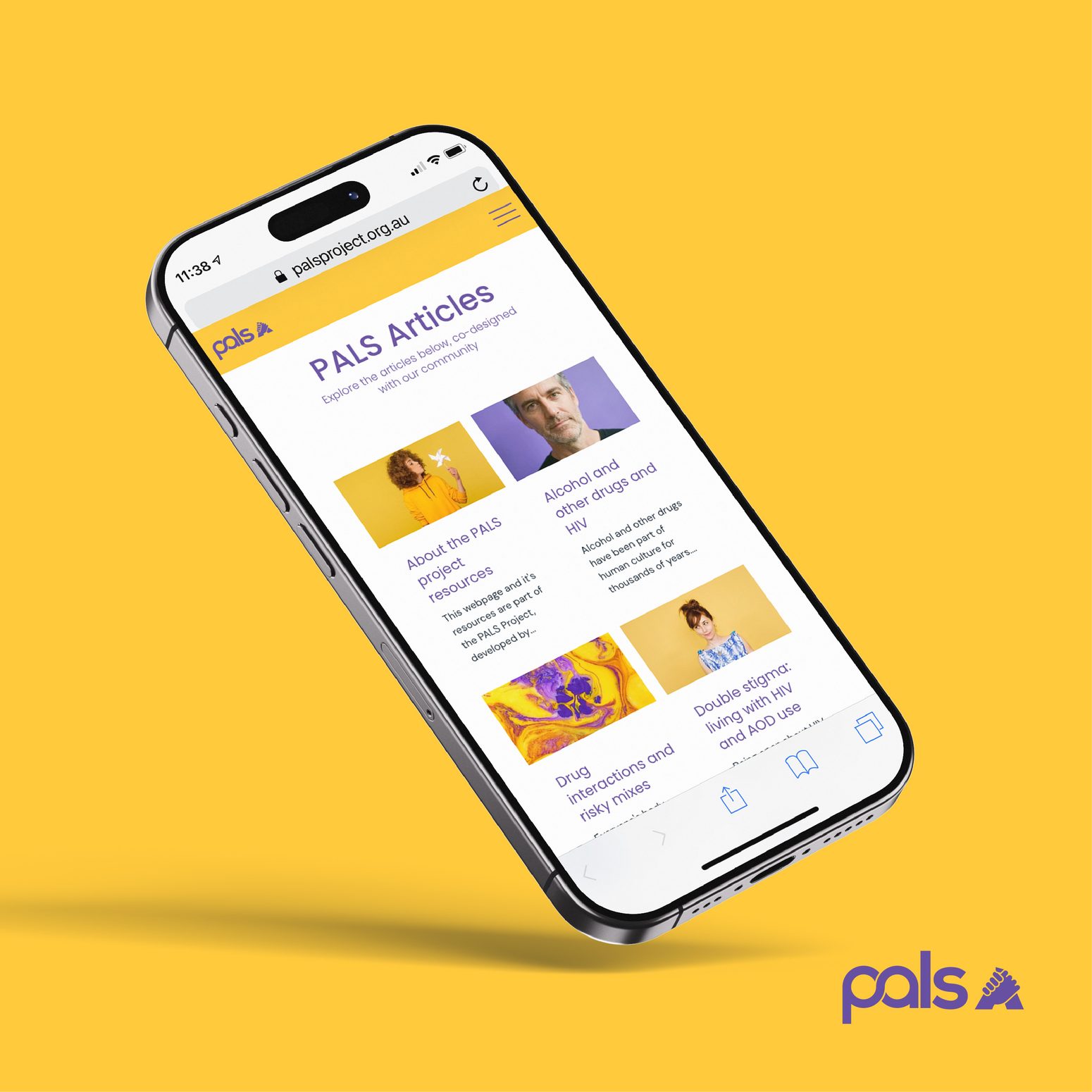
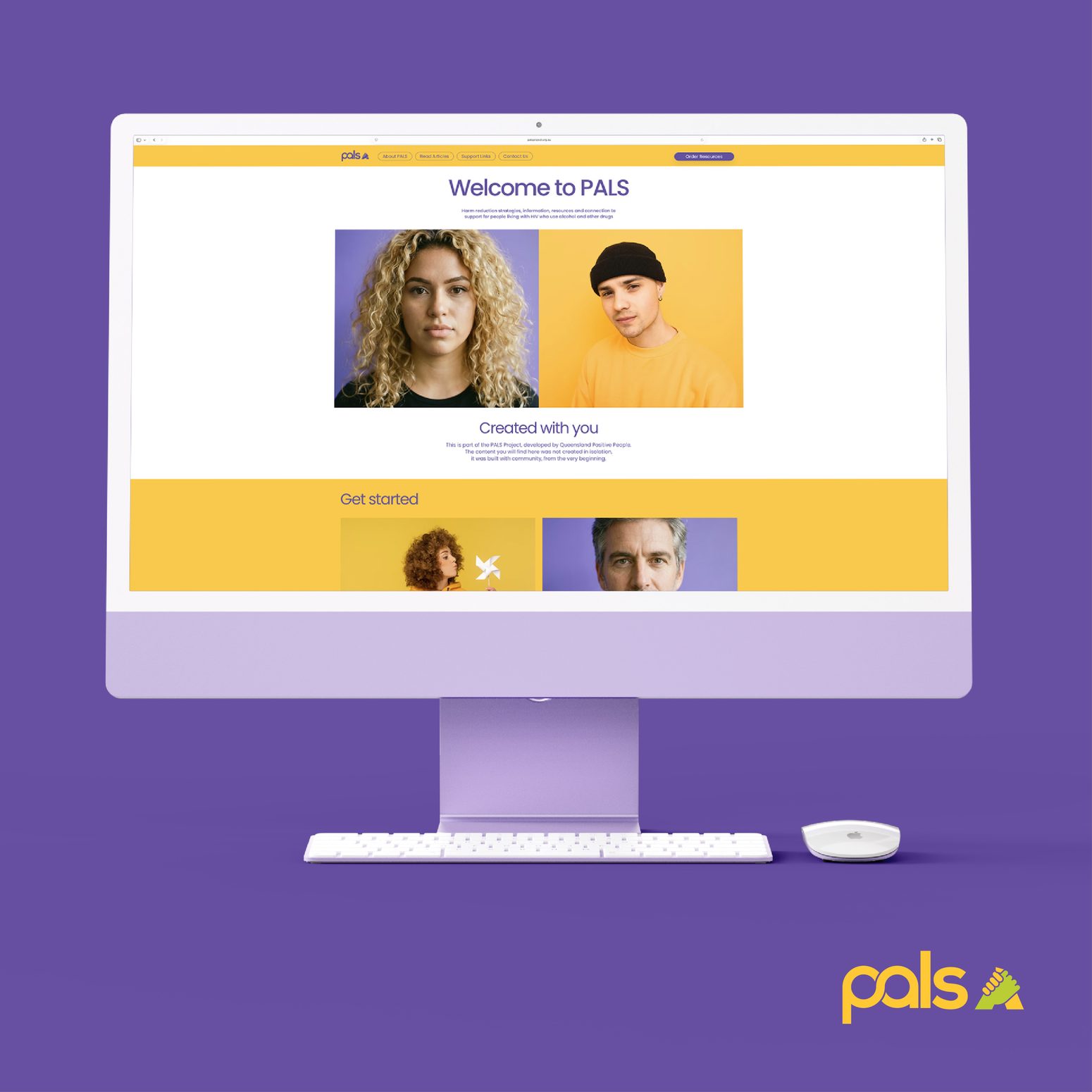
PALS: Positive AOD Life Support is a community-led co-design project delivered by Queensland Positive People, funded by the Queensland Mental Health Commission. PALS was developed to better understand the experiences and needs of people living with HIV in relation to alcohol and other drug use, and to co-design practical, evidence-informed resources responding to those needs.
Forty-four people living with HIV took part in seven peer-led workshops held across Brisbane, the Gold Coast, Sunshine Coast, Bundaberg and Cairns, including dedicated sessions for Spanish-speaking and trans and gender diverse participants. A second phase of co-design translated workshop findings into resource prototypes, refined through feedback from community members, Peer Navigators and specialist AOD organisations including ADIS and QNADA.
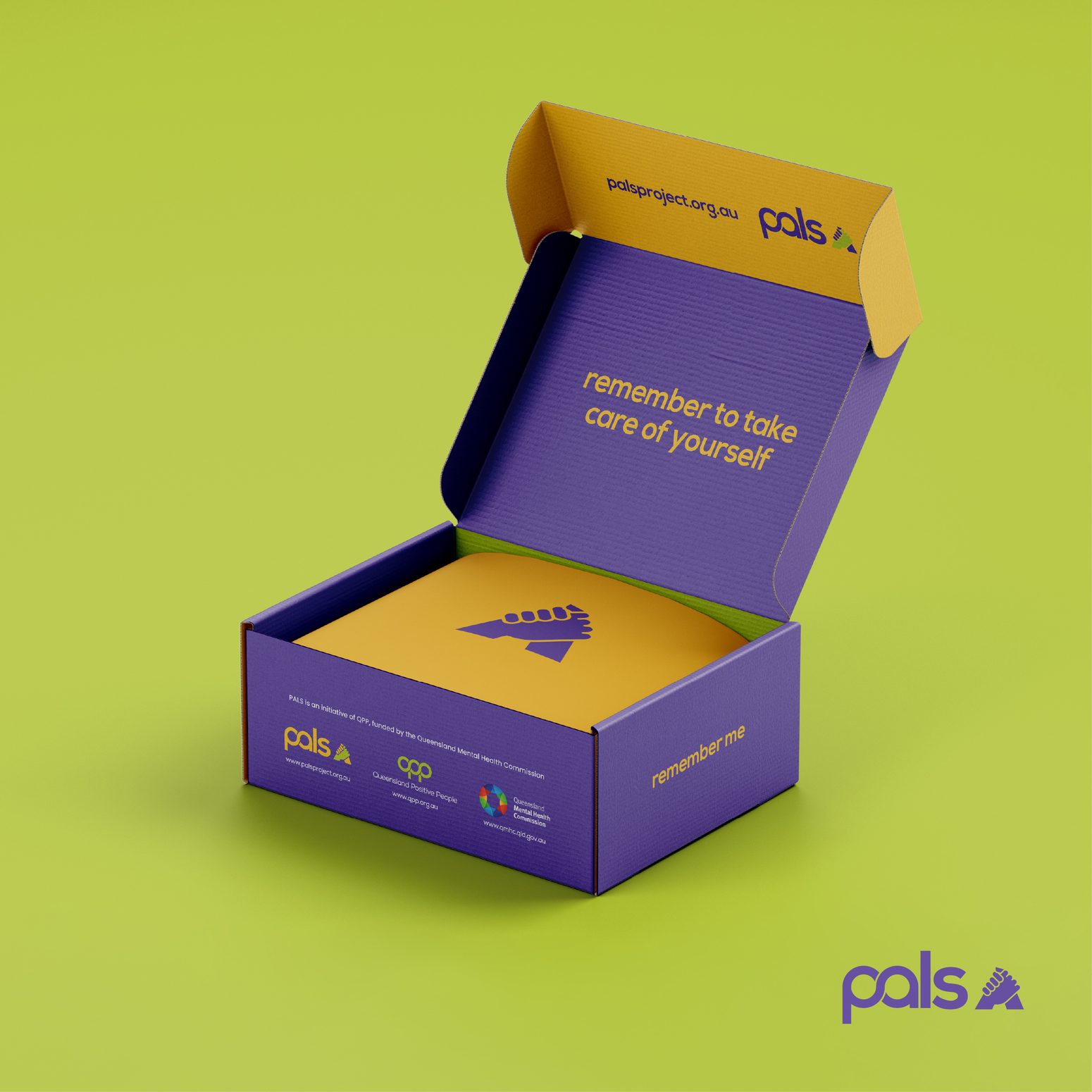
The project produced a suite of public-facing resources including the PALS website, The Facts: Alcohol and Other Drugs booklet, and the “Remember to” Diagnosis Kit, alongside an internal AOD Peer Navigation Module and Workbook to strengthen QPP’s workforce capability. PALS also generated new evidence on the intersection of HIV and AOD use through partnerships with the University of the Sunshine Coast and University of Southern Queensland, with findings disseminated nationally and internationally.
People living with HIV experience elevated rates of problematic alcohol and other drug (AOD) use, yet there are very few AOD harm reduction or prevention approaches designed specifically by us for us. A scoping review conducted as part of the PALS project, synthesised 66 peer-reviewed articles, confirming this gap: existing AOD resourcing largely targets the general population or focuses narrowly on chemsex and severe dependence, overlooking upstream prevention and early intervention.
This absence is compounded by double stigma, where HIV-related stigma is layered with AOD-related stigma, discouraging people from disclosing their drug or alcohol use and seeking support, even within HIV-specific services. Co-design workshops with 44 people living with HIV refined this understanding further, arriving at a new problem definition.
HIV diagnosis is not simply the moment a person is told they have HIV, but a period of adjustment that may extend for up to 24 months. This period includes several critical points at which conversations about AOD use, harm reduction and available support can occur.
Ageing and disability
Aged Care Navigation
QPP’s Aged Care Navigator program is part of the Commonwealth Government ‘Care Finder’ program supporting older people to access My Aged Care and the aged care and broader health and social services system generally. QPP works in consortia with Micah Projects and Communify to support people with HIV and LGBTQIA+ older people in the Brisbane area and beyond. Clients are referred into QPP’s Aged Care Navigator from our case management and peer navigation teams, self referred through our website, via consortia partners, GP’s and sexual health services.
Key statistics:
- 66 new referrals to Aged Care Navigation in 12 months
- 608 referrals out to other services on behalf of these clients
Key areas where referred clients need support and referrals:
- Housing – rising rents, lack of low cost or emergency housing, and risk of homelessness.
- Waiting lists and lack of service availability for in home care.
- Low digital literacy, ability to navigate online service access systems.
- Social isolation and lack of transport.
- Strained family relationships or no family support.
- Complex health and mental health presentations needing coordination, especially cognitive impairment or decline.
It is widely recognised across the Aged Care sector that systemic gaps and barriers persist for accessing appropriate supports in a timely manner, and active advocacy continues with the Commonwealth Government toward improvements. One of our staff is supporting a client to make a formal submission to the Aged Care Parliamentary Inquiry. The client is a long term survivor with HIV experiencing significant barriers caused by structural problems within the aged care system. QPP has also initiated additional advocacy in collaboration with NAPWHA for people living with HIV who experience aging and frailty at an early age, contributing case studies and thematic issues evident in the work we do in this program.
Better Connect+ – fun activities, but not solo
The Better Connect+ (BC+) program aims to reduce social isolation that is common for people as they age, and is even more acute for the LGBTQIA+ community and people living with HIV. With long term funding provided by the Queensland Department of Families, Seniors, Disability Services and Child Safety, our Better Connect+ program includes a part-time peer worker position with a small amount set aside for events.
Better Connect+ supported 54 events and outings across the 12 months, with 237 attendances. Some of the opportunities have included: fortnightly yoga sessions, monthly Saturday afternoon movies at New Farm Cinema, bushwalks, AFL games, GOMA art exhibitions and cinema, Transport to QC Café, World Science Festival, Roma St Parklands tours, Billie Jean King Tennis Cup, The Tivoli and Princess Theatre music gigs.
Safe spaces for our communities continues to be a significant need. The Better Connect program has created an unbranded Humanitix and Facebook group to enable a safer venue for advertising out events. Our last minute tickets offers from The Tivoli and QPAC are distributed through a new Whats app group.
The cost of loneliness can be profound. Social isolation can lead to an increased risk of dementia, stroke, and coronary heart disease. The mental and physical consequences of loneliness are often increased rates of depression and alcohol and other drug use. People living with HIV already have increased risk factors for all these outcomes. Annihilated social networks, trauma, stigma and discrimination are experienced by many and reinforces this sense of isolation.
We have included comments from two participants that illustrate the range of situations our communities faces and the positive outcomes, opportunities for cross referrals and community building that has emerged from this program.
“I’ve been isolating at my unit and not been out socially for months, I’ve been depressed and I think paranoid. The AFL football match took me out of that environment completely. I was able to disclose to the BC+ staff member what had been going on and how it was affecting me. I haven’t been to a football game in person since I was a kid, it was a full stadium, usually this number of people would fill me with anxiety. It was thrilling. I will now attend the BC+ yoga and re-start my gym membership. It surprised me how quickly my sense what was possible could change.”
“I have been gradually losing my sight, this is an isolating experience. I used to help out at Allen St Drop in centre and miss that community. I always used to enjoy the movies but between the transport, the stairs and people making risk assessments for me, my life is restricted, BC+ provided transport and I was able to see Devil Wears Prada with a group of people and then go out for coffee afterwards with a guy I hadn’t seen for ages. I was able to talk about places we used to go when I was younger, and he knew common friends that had died or moved away”
Stigma & discrimination
The QPP and the HIV/AIDS Legal Service partnership continues to demonstrate community need
Despite improved health outcomes for people living with HIV, misunderstandings about HIV mean stigma and discrimination remain significant challenges for the community.
The QPP/HALC partnership enables Queenslanders living with HIV to access legal information, advice, referrals, assistance with legal tasks and representation services where the matter directly relates to their HIV status. Representation services include assistance with visa applications and discrimination and/or privacy complaints as well as dispute resolution services and attendance at courts/tribunals relating to HIV and immigration, discrimination, disclosure, employment, child protection, domestic violence, financial and consumer matters.
In 2025-26, the QPP/HALC partnership provided legal advice and legal representation services to 99 people living with HIV in Queensland. Most of these clients were born overseas. Many of these clients were interacting with the immigration system, were homeless or at risk of homelessness, were experiencing financial disadvantage, or were experiencing or at risk of family violence.
Services included legal information to improve legal literacy for people living with HIV, tailored legal advice, and assistance with legal tasks. Ongoing representation was provided to clients with legal matters directly related to their HIV status where they could not afford private representation, and where there was not another suitable service to refer them to. These services were in a range of areas, including discrimination, wills and estate planning, immigration (skilled visas and protection visa), unfair dismissal and other employment-related issues.
We distributed copies of our latest QPP Disclosure Guide, which provides up-to-date information on the legal requirements surrounding disclosure of HIV status to employers, sexual partners, insurers and other external parties.
Funding relief for people living with HIV
Continuing positive impact: the HOPE Fund’s year of community support and empowerment
The Hats Off Positive Endeavour (HOPE) Fund was established on 1 February 2006 by co-founders David Bermingham and Simon O’Connor to provide support for people living with HIV who are experiencing hardship across Queensland.
The Fund is a collaborative initiative of Oz Showbiz Cares/Equity Fights AIDS and QPP, in partnership with the Queensland Council for LGBTI Health (QC). Applications are assessed by a grants committee comprising one representative from each organisation, who collectively determine the outcome of each application.
At the heart of the HOPE Fund is the belief that every person living with HIV deserves the opportunity to thrive. The HOPE Fund empowers individuals through small grants that support health, wellbeing, and social inclusion. Grants are available for goods and services that assist people living with HIV who are facing financial hardship, have a demonstrated material need, or are seeking opportunities to enhance their quality of life.
Together, we are building a more inclusive, healthy, and hopeful future for all people living with HIV in Queensland.
Thank you HOPE Fund, these white goods will make a huge difference to my life.
HOPE Fund Recipient
Seven people living with HIV were supported through The HOPE Fund in 2025/2026 with the total amount awarded being $6,573.21.
The balance of The HOPE Fund at 30 June 2026, after all grants were awarded and paid, was $77,110.41.
| Investment Distributions | $3,289.35 |
| Donations | $1,014.29 |
| Interest | $145.32 |
| Realised Investment Gain/Loss | $1,041.23 |
| Rebates | $137.84 |
| Unrealised Investment Gain/Loss | $181.94 |
| Total Income | $5,809.97 |
You can explore the below data in greater detail but hovering over each data point you are interested in, and display/omit data by clicking on the chosen option/s from the key below.
We extend our deepest gratitude to our committee, our partners, donors, volunteers, and the incredible individuals we serve. Your support, passion, and dedication are the driving forces behind this initiative.
HOPE Fund Recipient
I am so grateful HOPE Fund was there when I needed it. Thank you very much
Easing the impact of the increasing cost of living – the Emergency Treatment Fund (ETF)
The Emergency Treatment Fund (ETF) is a QPP-managed program, funded annually by Queensland Health, that provides short-term financial assistance to people living with HIV in Queensland who are experiencing financial hardship, including those who are ineligible for Medicare. The fund aims to support early and sustained engagement in HIV treatment and related services.
Assistance may cover clinical consultations, medication costs, food, communication expenses (e.g., phone credit), travel, and emergency accommodation. Requests for other essential expenses that could affect treatment adherence are also considered.
In the past year, the ETF supported 100 people living with HIV—86 Medicare-eligible and 14 Medicare-ineligible individuals. This is an almost 10% increase in supported clients over the 2024–2025 financial year, with overall expenditure a little lower. However, the need for assistance with food (including baby formula) significantly increased again, with housing and medications continuing to represent a large proportion of other requests for support..
Increasing support for increasing needs – the CCF
The CCF is an annual grant provided by Queensland Health to QPP, aimed at supporting people living with HIV who have complex needs. To access the fund, individuals must be referred to QPP by the HIV Public Health Team. The fund’s primary purpose is to offer practical assistance that helps remove barriers preventing engagement in HIV treatment and care.
The CCF supported 45 people living with HIV on 104 occasions, with assistance covering areas such as medication, housing, transport, accommodation, and communication needs. This continues the trend for increased support from the CCF that presented in the previous financial year.
Applications to the fund are submitted by HIV Public Health Team and QPP case managers on behalf of those receiving collaborative support. A committee, consisting of representatives from QPP and the Communicable Diseases Branch, is responsible for assessing these applications.

Inclusive and innovative services
Inclusive and innovative services


World AIDS Day
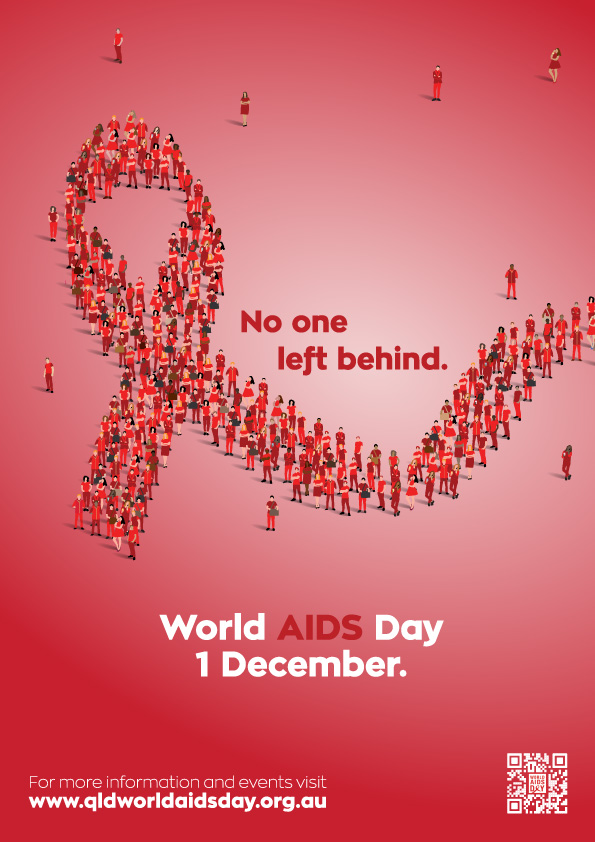
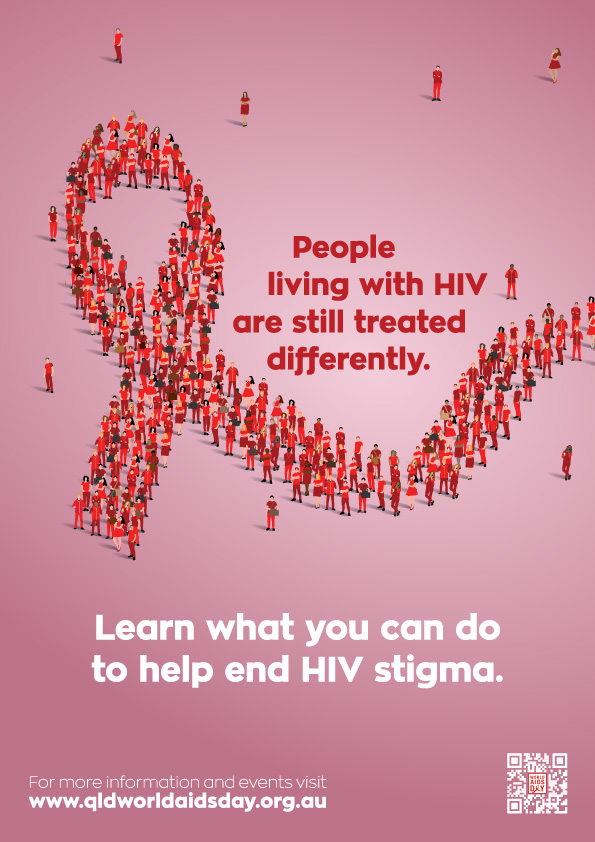
World AIDS Day 2025 – No one left behind
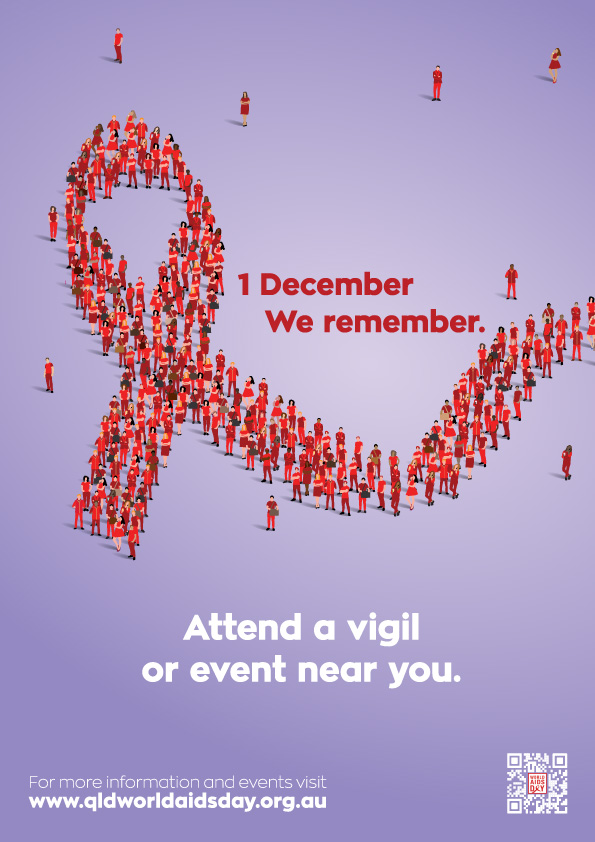
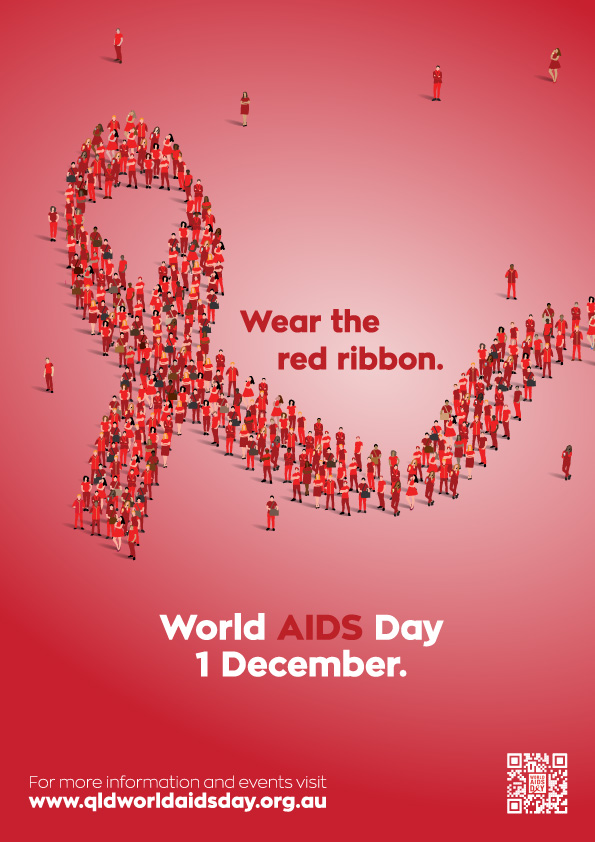
Held on 1 December, World AIDS Day is the longest-running awareness initiative of its kind. Since 1988, World AIDS Day and the iconic red ribbon have raised awareness about issues surrounding HIV/AIDS and commemorated those lost to the pandemic. While awareness and community education are prioritised, funds raised for World AIDS Day across Queensland are donated to The HOPE Fund.
The national theme for World AIDS Day 2025 was “No one left behind”. This theme reflects the inequities in HIV prevention, testing, treatment, and quality of life—particularly for Aboriginal and Torres Strait Islander peoples, people from culturally and linguistically diverse (CALD) backgrounds, and marginalised communities, including those in regional and remote areas across Australia. This theme calls for a united commitment, alongside the community, to creating supportive environments where health outcomes are equitable for all people living with HIV.
World AIDS Day Awareness Campaign
QPP, in partnership with the Queensland Council for LGBTI Health (QC) and the Queensland World AIDS Day Alliance (QWADA)—and led by the HIV-positive voice—continued our curated messaging to reflect the ongoing HIV response.
Our multi-language World AIDS Day awareness social media campaign reached over 375,500 people with almost 571,000 impressions, building further reach on top of previous years’ records.
This campaign featured a series of messages developed to raise awareness, inspire remembrance, and provide contextual health information about HIV. It was delivered in English, Portuguese, Spanish, Simplified Chinese, Vietnamese, and newly added this year Indonesian.
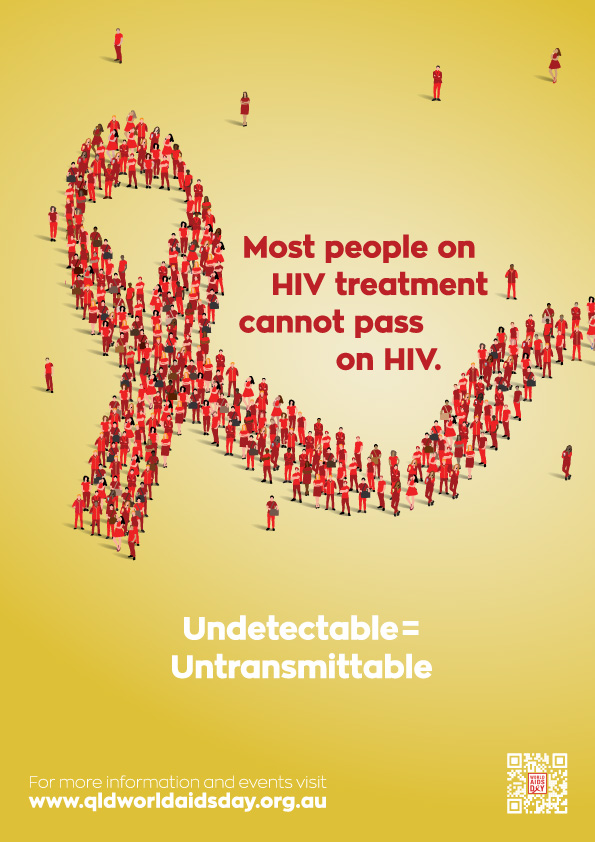
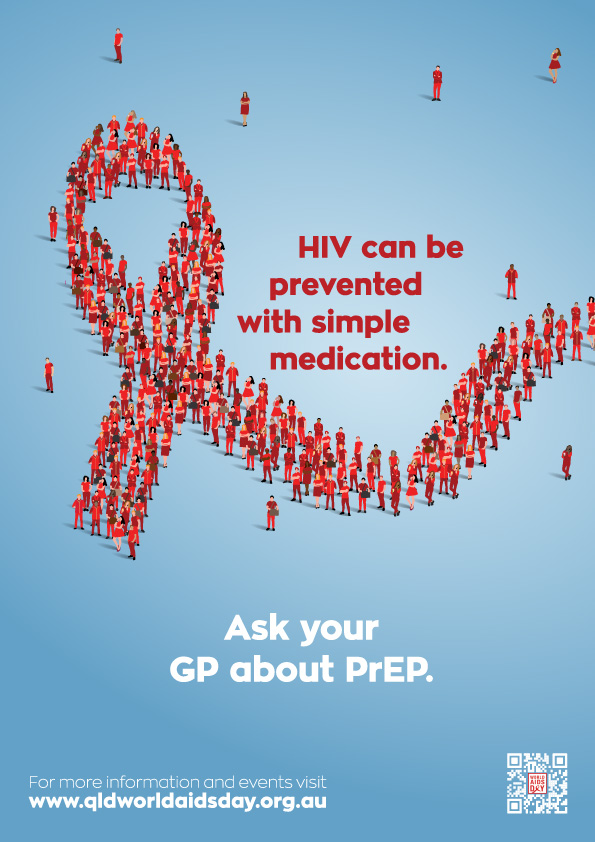
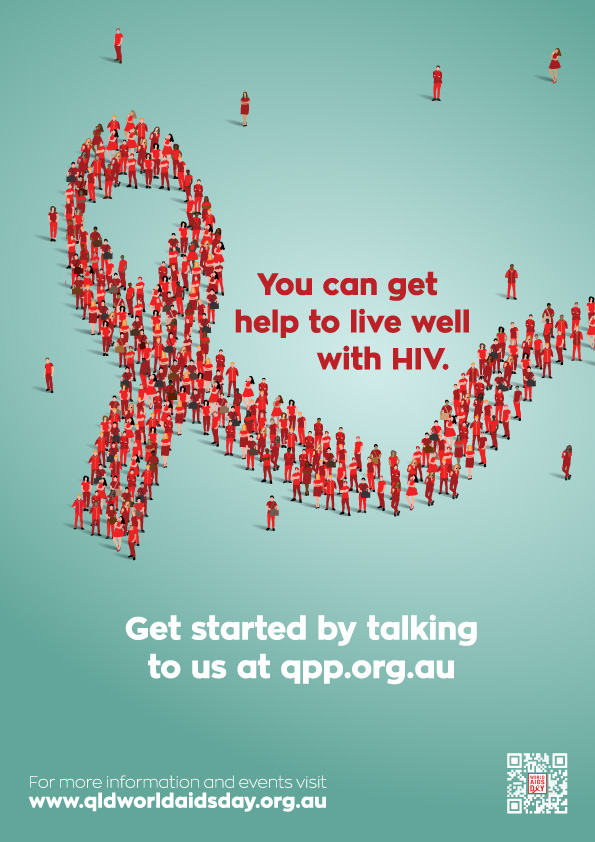
To accompany our social media campaign, our World AIDS Day digital billboard and street media campaign achieved a total of approximately 100,000 views during HIV Awareness Week (64,000) and on World AIDS Day (36,000).
A total of 33 boards and sites displayed the colourful creative during this period right across Queensland, with an additional two iconic sites in high-exposure locations in Brisbane added on World AIDS Day. These locations included Albany Creek, Browns Plains, Bundaberg, Bundamba, Burleigh Waters, Caboolture, Cairns, Carseldine, Chapel Hill, Clifton Beach, Coorparoo, Eagle Farm, Emerald, Fortitude Valley, Gympie, Hermit Park, Ipswich, Maryborough, Mission Beach, Mount Isa, Rockhampton, South Brisbane, South Toowoomba, St George, Surfers Paradise, Townsville City, Upper Mount Gravatt, and Virginia.
A media pack featuring World AIDS Day messages—including Wear the Red Ribbon, U=U, PrEP, HIV Support, and Stigma & Discrimination was made available for download in six languages, anchored by the ‘It starts with me’ message.
World AIDS Day Events
Once again, QPP supported the Queensland Council for LGBTI Health (QC) to deliver in-person World AIDS Day events that provided opportunities for remembrance and raised awareness around the day’s core themes.
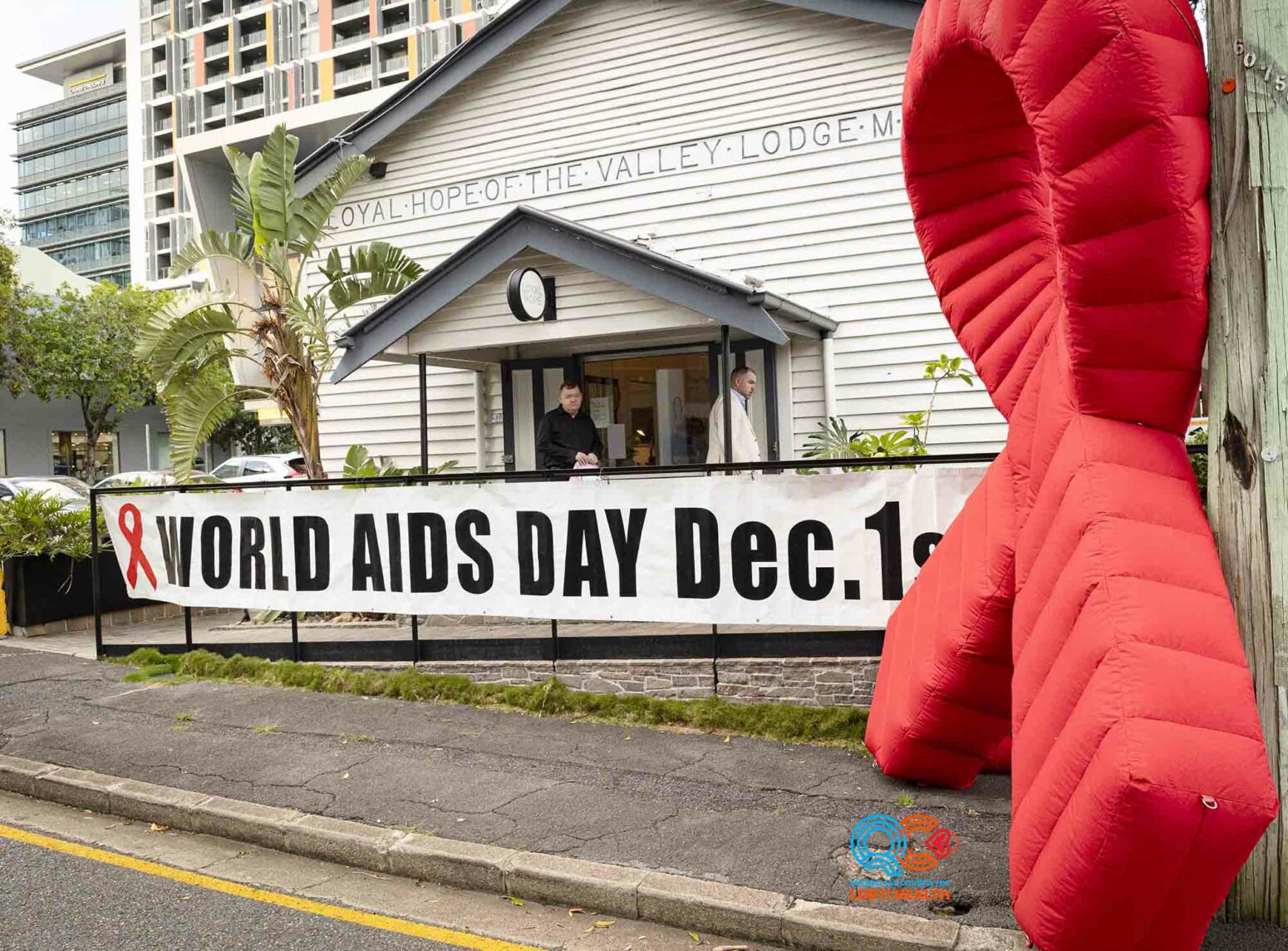
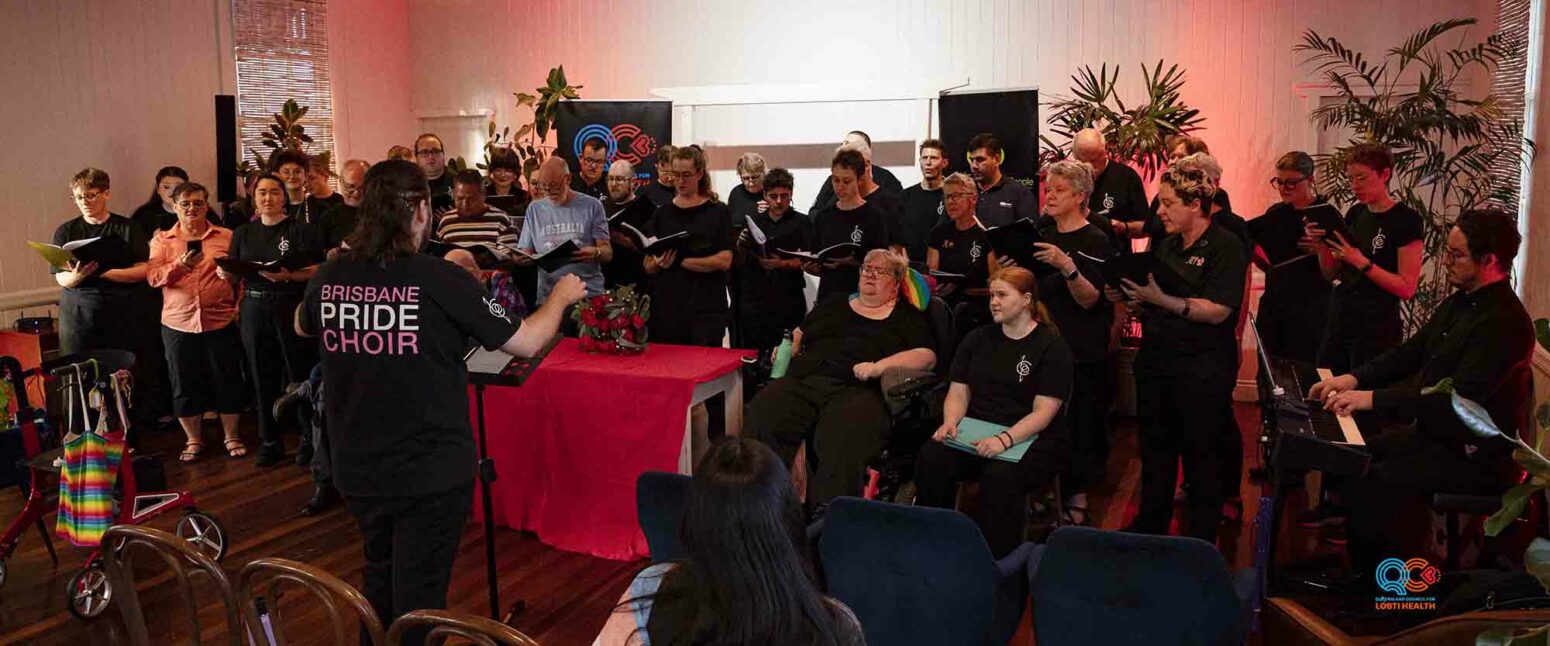
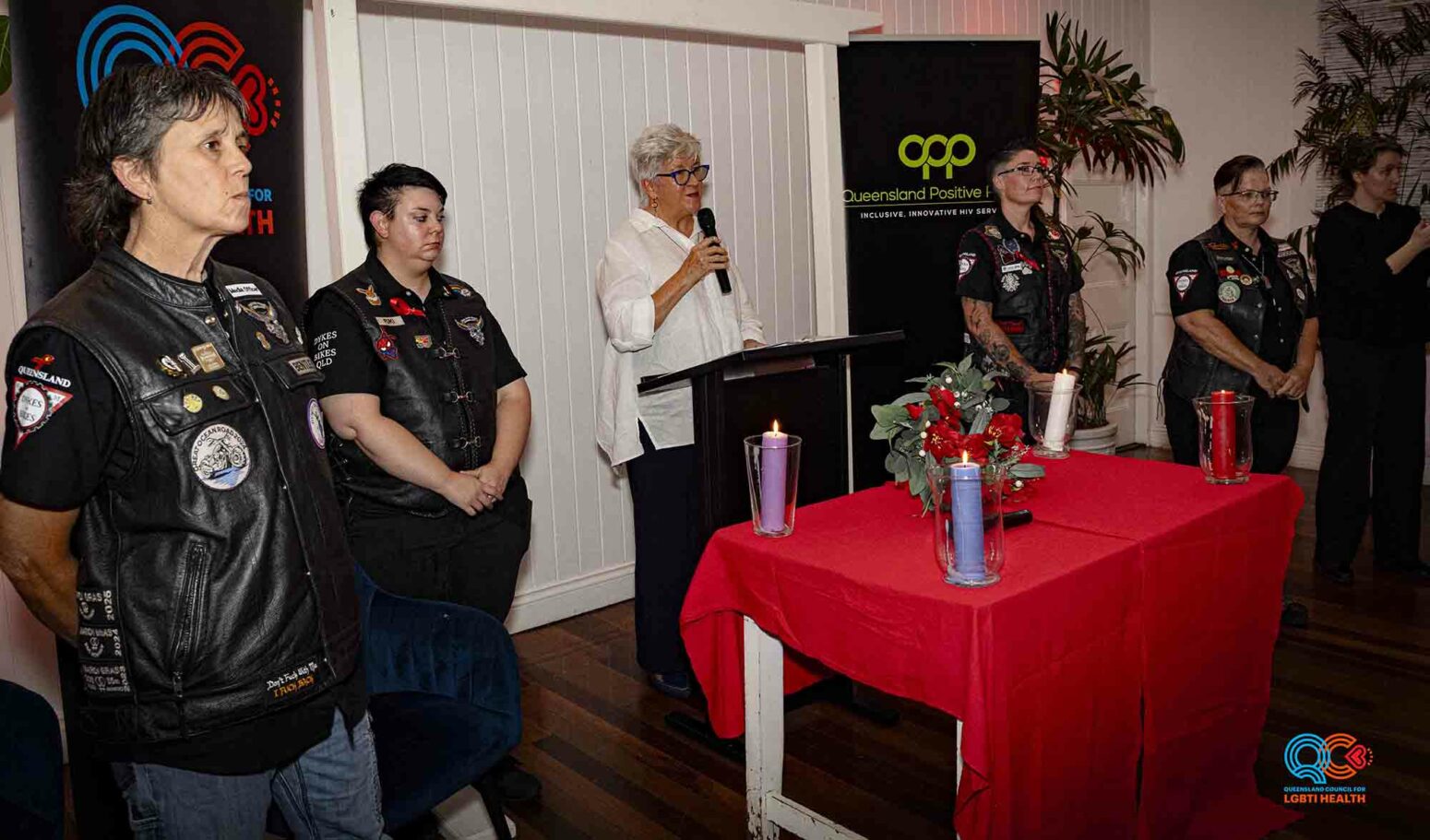
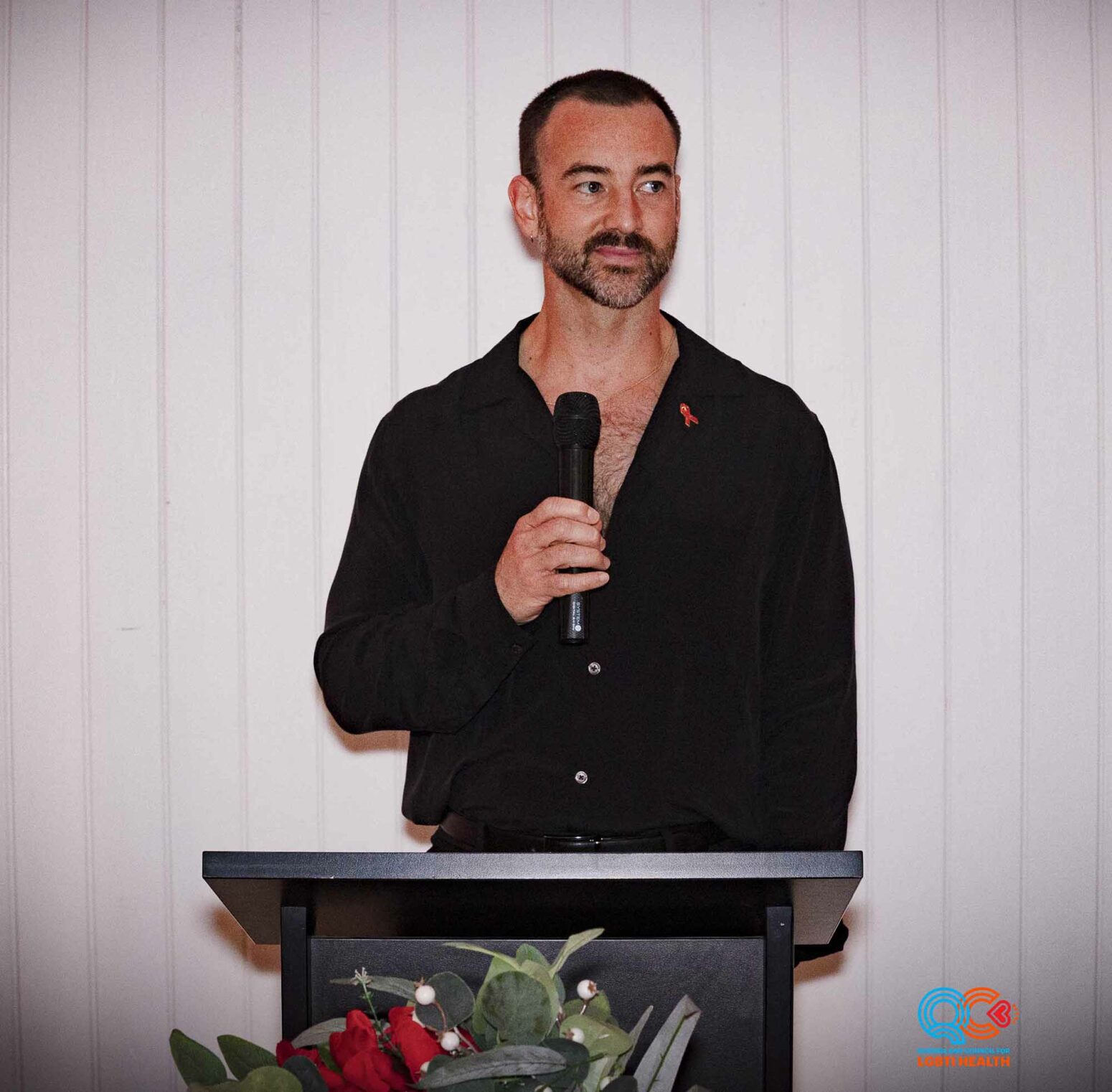
The Brisbane Candlelight Vigil, hosted by QC, was held at Loyal Hope Hall in Fortitude Valley. QPP assisted QC by MCing the vigil, with QPP’s President, Ed Pilling, delivering an impactful address. The vigil was attended by more than 200 people, including dignitaries, community members, and healthcare professionals.
The Cairns Vigil, held at the Cairns Esplanade, was attended by at least 40 community members, with members of the QPP team playing important roles in the service.
Both candlelight vigils included a reading of lives lost to the HIV/AIDS epidemic, commemorating those the community has honoured and remembered throughout the 40+ year history, and offered spaces for the community to gather afterward.
Many buildings and structures around the state were illuminated in red throughout World AIDS Week and on World AIDS Day, with local councils and the Queensland Government once again continuing their support.

QPP and QC also worked collaboratively to implement and promote the Regional Grants Program, with one grant awarded to the Gold Coast Pride Collective for their ‘Gold Coast World AIDS Day Memorial’ gathering.
While the number of grant applications was noticeably lower for the 2025 events, an additional four regional events received in-kind assistance from QC and QPP for promotion, resources, and organisation. These events raised awareness, provided opportunities for remembrance, and amplified the HIV-positive voice through:
- World AIDS Day Information Stall – Mulungu Mareeba (1/12/25)
- Sunshine Coast World AIDS Day Morning Tea – QC Naamba (1/12/25)
- Toowoomba World AIDS Day Morning Tea – QC Toowoomba (1/12/25)
- Townsville World AIDS Day Vigil – QC Gurambilbarra (1/12/25)
World AIDS Day Parliamentary Breakfast
QPP, QC, 2Spirits, QuIHN, QuIVVA, Respect Inc, and the Queensland LGBTQIA+ Alliance collaborated to host a Queensland World AIDS Day Parliamentary Breakfast, with the kind support and invitation of the Honourable Tim Nicholls MP, Queensland Minister for Health and Ambulance Services.
Over 90 people attended the Parliamentary Breakfast, including 20 members of the Queensland and Federal parliaments from both major parties; government and departmental officials, including Queensland’s Chief Health Officer; and representatives from the Queensland Mental Health Commission, Queensland Police Service, and Queensland Human Rights Commission.
Also in attendance were key representatives from national peak bodies, including NAPWHA, Health Equity Matters, Scarlet Alliance and Australian Injecting & Illicit Drug Users League, along with a representative from the Commonwealth Department of Health. Community organisations and advocacy groups were strongly represented, featuring several members from the Queensland LGBTQIA+ Roundtable.
The Minister for Health and Ambulance Services, the Honourable Tim Nicholls MP, and his opposition counterpart, the Honourable Mark Bailey MP, both delivered addresses. The event also featured speakers from each host organisation as well as individuals with lived and living experience
iLearn stigma module
Reaching the health workforce with our HIV, Hep B and Hep C stigma reduction module.
##
Reaching our community
Being a source of truth in a shifting landscape
The past year has brought seismic shifts to the HIV landscape, from major breakthroughs in long-acting prevention and treatments to policy shocks and funding reductions worldwide. The rapidly changing communications and social media landscape is no different, we have witnessed morphing algorithms, fierce platform competition, and the rapid rise of AI.
With these changes comes progress, but also significant challenges.
People living with HIV and our allies are no strangers to stigma, misinformation, and online harassment. Today, these threats extend beyond individuals tapping away in the dark, they are driven by automated spam networks, bot fleets, and server farms. Armed with misleading medical claims and synthetic media, they thrive on “click-to-anger” content consumption.
While this may sound daunting, there is a clear path forward. The most effective way to combat misinformation is to provide accurate, up-to-date, and trusted information wherever people seek it.
Once again, QPP’s digital platforms reached record engagement this year. Nearly 100,000 people visited a QPP websites or pages to learn about HIV, support services, testing, treatment, and prevention. Furthermore, our accurate, stigma-free content served as a trusted reference for major search engines and AI models, generating over four million impressions throughout the year.
We also continued our strong investment in accessible print resources. From our HIV Disclosure Guide to The Facts series, materials were distributed across Queensland. Our HIV and Hepatitis Stigma learning module was promoted to healthcare workers, police, corrections personnel, government agencies, and the general public. Additionally, we developed dedicated resources and a new website for The PALS Project, supporting people living with HIV who use alcohol and other drugs, and upgraded the QPP Shop to make ordering all resources free and seamless.
Over the past year, we have remained a voice for those who cannot safely speak for themselves, bringing visibility to our diverse community. We will continue to evolve, listen, and serve as the trusted source of truth for our community and the public.
Diversity, inclusion and belonging
Awareness into action
Queensland Positive People thrives on the diverse cultures, identities, and lived experiences of our clients and community members. Harnessing these perspectives allows us to deliver flexible, high-quality care that truly meets people’s needs.
For us, inclusion is an active, evolving process. We embed these values directly into our systems and policies so every employee and client feels genuinely respected and supported. Guided by our values and Queensland’s Human Rights Act 2019, we are accountable for sustaining a safe, inclusive workplace culture. Cultivating belonging is a collective responsibility vital to an equitable future.
We remain committed to turning the awareness of privilege into tangible actions that break down barriers, uplift underrepresented voices, and drive real progress.

QPP acknowledges and respects Nigooli as the custodian of the cultural knowledge represented on the artwork featured above and in our Reconciliation Action Plan.
Key actions in 2025–2026 included:
- Implementation of our Innovate Reconciliation Action Plan (RAP).
- Implementation of a Diversity, Inclusion & Belonging Policy.
- Implementation of a First Nations Cultural Responsiveness Policy.
- Implementation of the Reasonable Adjustments Policy and Procedures.
Priorities for the next two years:
- Continue reviewing QPP systems through the lens of anti-discrimination and inclusion.
- Continue to implement the Innovate RAP.
- Leverage diverse perspectives in service delivery design through the Community Advisory Group.
- Ensure safe, inclusive practices and a workforce that reflects the communities we serve.
Inclusion isn’t a one-time checklist at QPP, it’s built into how we work, lead, and support our communities every day. Our steady progress throughout 2025–2026 highlights this ongoing focus, and our future goals will keep equity and respect central to who we are as an organisation.

Enhancing relationships
Enhancing relationships


Volunteers
2026-2031 QPP Strategic Plan co-design
In the development of our 2026–2031 Strategic Plan, the voices of our clients and communities remained at the centre of our path forward. Co-design, co-creation, and collaboration were fundamental to this journey. Embedded in our core values, these principles enabled us to understand and respond to the diverse needs and priorities of people living with HIV and affected communities across Queensland.
To shape our strategy, we undertook broad consultations with QPP’s clients, communities, employees, Board members, peak national bodies, and external partners and funders through face-to-face sessions, online forums, and surveys. We also analysed clinical, social, and epidemiological data and research, alongside relevant state and national policies.
The final framework and priorities were jointly created by clients, community members, QPP employees, and Board members during a Collaborative Design workshop.
We deeply appreciate the contribution made by each person who has been a part of this process.
Community Advisory Group
At QPP, we are deeply committed to authentic community consultation, guided by the principles of GIPA/MEPA with our Community Advisory Group (CAG), which is now comprised of five members from diverse lived‑experience backgrounds.
This group meets every two months, offering vital insights that shape our program development, strategic direction, policy, advocacy, and service delivery. Addiontally, this past year the CAG members played a valuable role in the development of our 2026-2031 Strategic Plan.
We were also fortunate to welcome our CAG members to our annual face-to-face gathering in early 2026, creating a wonderful chance for them to connect with QPP staff and Board members in a more personal and dynamic setting.
We extend our deepest gratitude for our CAG’s ongoing guidance, and we continue to value their contributions in steering QPP’s strategic priorities and ensuring our work remains shaped by the voices of the communities of people we serve.
Thank you to our wonderful volunteers
In response to feedback from our 2021 Engagement Survey, the community expressed a strong desire for more volunteering opportunities. We commissioned an options paper, exploring how a revitalised Volunteer Program can recruit and train diverse volunteers, prioritising peers and allies, to foster meaningful connections and support across Queensland. This initiative aligns with our mission to improve the quality of life for people living with HIV and strengthen our community impact. We are currently looking for funding opportunities to develop the foundations for a strong and vibrant VolunPeer community.
While we are still working on a this, we’d like to thank our QPP Board, community hosts, volunteers, supporters, allies and everyone that has contributed their time, skills, knowledge and passion over the past year in supporting QPP, our social groups, events and activities. We couldn’t do what we do without you.
“The smallest act of kindness is worth more than the grandest intention.”
Oscar Wilde
State of the Nation
NAPWHA update
##
Community events
The CWC Cabaret


In August 2025 and March 2026, long time venue and supporter, The Sportsman Hotel was once again filled to capacity for our Citizens Welfare Committee (CWC) Charity Cabarets. These events, a much-anticipated highlight of the Brisbane drag scene, have been running every year for more than 30 years, helping to raise much-needed funds for people living with HIV in Queensland. A unique and diverse cavalcade of almost 40 performers, donate their time, talent, and enthusiasm all to raise funds and support QPP.
Both events included an array of drag identities from all Brisbane queer venues, as well as some of Queensland’s best-loved performers from years gone by. Betty Nature was the master of ceremonies, performer, and organiser extraordinaire for this year’s events, as they have been for over 30 years.
With Betty at the helm, all of the performers, and with the generous raffle donations from both The Den Fortitude Valley and The Sportsman Hotel and other local businesses, the two events raised a total of $2,900.32. Their contributions, together with the generosity of the patrons, help us raise funds that make a substantive impact to the quality of life of people living with HIV in Queensland today.
In sad news however, just prior to the March CWC beloved DJ at The Sportsman Hotel Merlin passed away. DJ Merlin (Glenn Price) through his 25 years at Sporties was a passionate supporter of the CWC Cabaret. He was an icon of the Brisbane drag community, and is deeply missed.
We thank Betty and all the performers, sponsors, and patrons for their continuing support of CWC. The proceeds help provide peer support events and activities that foster empowerment and resilience by enhancing self-esteem and social connectedness among our diverse, and sometimes isolated, positive community.
You can keep up to date with the next CWC event by following the Facebook page.
Membership
Become a QPP member
QPP would like to invite all people living with HIV residing in Queensland to join us in supporting the delivery of Queensland-wide services for our community. Membership is free, and as an ordinary member, you will:
- Gain voting rights at our annual general meeting
- Attain eligibility to be a sitting board member of QPP
- Never miss out on events for people living with HIV
- Be kept informed on all the latest national and international news
about HIV - Have more opportunities to meet and connect with other people living with HIV and
much more.
Any member of the public (regardless of HIV status) and organisations can become QPP associate members.
To become a member, just give us a quick call on 1800 636 241, or email us and ask for a membership form to be sent to you today, or you can access them below.

Best practice standards
Best practice standards


Peer and staff training
Staff training and professional development helps us better serve our community
Staff training and professional development helps us better serve our community
Ongoing staff training and development continues to play a vital role in strengthening our expertise and enhancing the quality of our work. When staff have access to meaningful learning opportunities, it not only builds knowledge and confidence, but contributes to a more engaged and motivated workforce. Ultimately, a well-supported and skilled team is better equipped to deliver high-quality services and achieve meaningful outcomes for the communities we serve. Some of the workshops and training QPP has participated in this year include:
- Australasian HIV&AIDS Conference
- Australasian Sexual & Reproductive Health Conference
- Child Safeguarding Matters: Understanding the New Child Safeguarding Requirements
- Cyber and AI Governance: Actions you can take today
- Health Equity Matters Health Promotion Forum
- Inclusive Language, Intersectionality & Centring Voice
- Introduction to the Human Rights Act
- NAPWHA National Forum
- QCOSS Conference
- Qualitative Thematic Analysis Masterclass
- Strategic Risk Management for Not-for-Profit Leaders
- Supporting LGBTQIA+ People Experiencing or Using Violence
- Understanding Pathways to Safety: Brisbane Domestic & Family Violence Forum
- Working with People affected by Squalor
- Workplace Health and Safety Show
Our peer workforce have also been engaging in opportunities to increase their knowledge and skills through attending the HIV Peer Practice Conference, completing NAPWHA Peer Navigator training, HOLA online learning modules and attending the Positive Leadership Development Institute (PLDI) training.
Advocacy
Elevating Voices, Driving Change: QPP’s Advocacy Impact
QPP continues to use the experiences and expertise of people living with HIV to advocate for policy, systems and services that promote equity, reduce stigma and discrimination, and improve access to prevention, treatment, care and support.
At a national level, QPP has worked closely with NAPWHA and peer-led HIV organisations across Australia to advocate for the expansion of HIV Peer Navigation Programs. Together, we have developed a national model of care and funding proposal aimed at improving equitable access to peer navigation across Australia, particularly in jurisdictions and communities where HIV peer support remains limited. This work seeks to strengthen recognition of peer navigation as an integral part of the HIV response and ensure more people living with HIV can benefit from connection with trained peers who understand their experiences.
QPP has also partnered with NAPWHA and its members to identify and advocate around emerging HIV and STI prevention and healthcare needs among workers participating in the Pacific Australia Labour Mobility (PALM) scheme. This work has highlighted structural barriers that can increase vulnerability and limit access to timely and confidential healthcare, including Medicare ineligibility, geographic isolation, cost, limited access to culturally appropriate health information, privacy concerns and stigma. We are advocating for a coordinated national response that strengthens culturally appropriate prevention and education and improves access to confidential testing, treatment and care.
Our national advocacy with NAPWHA and the HIV/AIDS Legal Centre (HALC) has also continued around discriminatory participation requirements within Boxing and Muay Thai. We have maintained pressure for national sporting bodies to adopt evidence-based, inclusive fitness-to-compete policies that assess participants individually rather than imposing blanket restrictions or requiring unnecessary disclosure of HIV status. While progress has been slower than hoped, QPP remains committed to pursuing reform and challenging policies and practices that unnecessarily exclude people living with HIV.
In Queensland, our advocacy is often grounded in the individual experiences of people living with HIV as they navigate health and social systems. Over the past year, QPP has supported a growing number of women living with HIV through pregnancy and perinatal care, working alongside obstetric, paediatric and other clinical teams to ensure women have access to contemporary information and are supported to make informed choices about their care, including birthing and infant feeding options.
Housing continues as an important area of advocacy. QPP team members work closely with people living with HIV experiencing housing insecurity or living in accommodation that is no longer safe or appropriate, supporting applications for housing and transfers and advocating directly with housing services. Where barriers cannot be resolved through usual channels, QPP has escalated matters to local Members of Parliament and Ministers. This combination of individual and systemic advocacy has contributed to people living with HIV accessing safer and more suitable housing and reflects QPP’s broader commitment to ensuring that the voices and experiences of people living with HIV translate into meaningful change.
Supported research
QPP research activities
At QPP, we recognise that engaging in research and contributing to the development of evidence is essential to ensuring that the needs and voices of people living with HIV remain at the centre of the programs and services we deliver.
Consistent with GIPA/MEPA principles, this applies equally to our research activities, with people living with HIV actively involved in guiding and shaping the questions we ask and the knowledge we generate.
Participating in research provides valuable insight into the lived experiences of our communities, allowing us to design targeted initiatives that respond to real-world challenges. This evidence-informed approach also strengthens our advocacy, enabling us to influence policy, secure funding and deliver impactful, community-led programs.
While we contribute to research spanning the spectrum of HIV response, this year some of the specific areas of research focus included:
- Culturally Responsive Health Data
- Contact tracing
- HIV health and the law
- Neuro HIV and ageing
- HIV related cancer and co morbitidies
- Health access technologies and translations
- Peer-led models of care
- First Nations health access
- Alcohol and other drugs harm reduction
We had our research participation showcased at a number of state, national and international conferences and events, together with numerous abstracts and articles.

Strengthening funding
Strengthening funding
Positioning QPP for the future
QPP’s role in integrated community led healthcare

More from the year
More from the year


Tributes
Vale Larah Seivl-Keevers
Larah was a truly special human. Those who worked alongside her will remember her gentleness and warmth, her strength and sharp mind, and the way she brought joy and humour into everyday moments. She had a calm, kind presence that made people feel safe, supported and cared for, and of course, many of us will remember her for her famous chicken soup.
She was a passionate about everything she did, of which there were so many hobbies and interests. This passion also reflected in the her advocacy for people living with HIV. She was a ally, an educator, and a friend. Larah leaves a lasting impact. She was deeply valued, not just for the work she did at QPP, but for the kindness and humanity she brought into the organisation and our community.
We extend our heartfelt condolences to Larah’s family, friends, and all who loved her.
Service to our community
Thank you for your service to QPP and our communities
Over the past 12 months, we bid farewell to five long standing team members Chris, Jeremy, Melania, Michael and Steve who were with us for many years. Together they contributed 44 impactful years to the positive community, bringing a unique combination of skill, warmth, and unyielding energy to QPP.
Driven by deep empathy and an uncompromising commitment to human rights, dignity, and peer-led care, they carried out their work with the utmost professionalism and heart. Whether fighting to eliminate stigma, navigating complex care systems, or offering steadfast day-to-day support, they embodied the core values of QPP at every turn. While we miss their daily presence, we are immensely grateful for their years of service and wish them the absolute best in their next chapters.
We would also like to extend our sincere thanks to David for his valued service and contribution to the QPP Board. His commitment, insight and support have been greatly appreciated, and we thank him for the time and expertise he has generously contributed to QPP and our communities. We wish David all the very best for the future.
Some of the many people and organisations we would like to thank
- 2Spirits
- 4ZZZ Radio – Blair Martin and Queer Radio team
- Abbott Laboratories
- AMA Queensland
- AMA Queensland Foundation
- ASHM Health
- Atomo Diagnostics
- Aunty Dawn Daylight
- Aunty Deborah Sandy
- Baxter Lawley
- Bernard Gardiner
- Brisbane North Primary Health Network
- Brisbane South Primary Health Network
- Burnet Institute
- Cairns Sexual Health Service
- CAASie
- Cepheid
- ChilliDB
- CodeTwo
- Communicable Diseases Branch – Queensland Health
- Communify
- Connect Housing Group Mackay
- Corporate Traveller
- CWC – Betty Nature and performers
- Department of Health, Disability and Ageing
- Daniel Cordner Design
- Diverse Voices
- Dr Amy Mullens
- Dr Andrew Redmond
- Dr David Siebert
- Dr Di Rowling
- Dr Jillian Lau
- Dr Joe Debattista
- Dr Judith Dean
- ECCQ
- Frooty Magazine
- Fujifilm CodeBlue
- Gai Lemon
- Gilead Sciences
- Gold Coast Sexual Health Service
Hecate Consulting – Lisa Ryan - Harrisons Human Resources
- Health Equity Matters
- Hepatitis Queensland
- HIV/AIDS Legal Centre (HALC)
- HIV Public Health Team – Queensland Health
- Independent Audit Services – Jeremiah Thun
- La Trobe University
- LCM Air Conditioning
- LGBTI Legal Service
Litton Andrews – Pippa Steel & Cathy Litton - Living Positive Victoria
- Lord Mayor’s Charitable Trust
- Mackay Sexual Health Service
- Mark Counter
- MAXimise your Communications – Neil Brimson
- McCullough Robertson Lawyers
- Media Heroes
- Metro North Public Health Unit
- Metro North Sexual Health and HIV Service
- Micah Projects
- Michael Brown
- Michele Tobin
- Mount Isa Sexual Health Service
- National Association of People With HIV Australia (NAPWHA) and its member organisations
- Nicky Newley-Guivarra
- Open Doors Youth Service
- Paul Buck
- PLDI Australia and New Zealand
- Poche Centre for Indigenous Health – UQ
- Positive Aboriginal and Torres Strait Islander Network (PATSIN)
- Positive Life NSW
- Positive Women Victoria
- Princess Alexandra Sexual Health
Q Clinic - QThink Consulting – Brent Allan
- Quality Innovation Performance (QIP)
- Queensland Aboriginal and Islander Health Council (QAIHC)
- Queensland Corrective Services
- Queensland Council for LGBTI Health (QC)
- Queensland Department of Families, Seniors, Disability Services and Child Safety
- Queensland Health
- Queensland Mental Health Commission
- Queensland Police Service
- Queensland s100 prescribing GPs
- Queensland Syphilis Surveillance Service (QSSS)
- Queensland University of Technology (QUT)
- Queensland Injectors Health Network (QuIHN)
- Queensland LGBTQIA+ Alliance
- QuIVVA
- QWADA
- Reconciliation Australia
- Respect Inc
- Right Source Accounting
- Rockhampton Sexual Health Service
- Sally Cripps
- Sexual Health Society of Queensland
- Simon O’Connor
- Sparky Marc
- Star Observer
- Sunshine Coast Sexual Health Service
- The Den Fortitude Valley
- The Hon Michael Kirby AC
- The Sportsman Hotel
- Toowoomba Sexual Health Service
- Townsville Hospital and Health Service – Public Health Unit
- Townsville Sexual Health Service
- University of New South Wales (UNSW)
- University of Queensland (UQ)
- University of Southern Queensland (UniSQ)
- University of the Sunshine Coast (UniSC)
- ViiV Healthcare
- Volunteers
- West Moreton Sexual Health Service
- Wet Spa and Sauna
- Wuchopperen Health Service

